- Introduction
- Why Infant/Baby Laundry Differs from Regular Laundry
- When to Wash Baby Clothes
- How Frequently to Wash Baby Clothes
- Safe Fabric to Choose for Clothes for Your Baby
- Preparing Baby Clothes for Washing
- Choosing the Right Detergent and Products
- How to Wash Baby Clothes?
- Stain Removal and Hygiene
- Drying Baby Clothes Safely
- Storing Baby Clothes After Washing
- Special Care for Sensitive Skin
- Climate-Based Washing Tips
- Common Mistakes to Avoid During Baby Clothes Laundry
- Baby Clothes Laundry Checklist
- Frequently Asked Questions (FAQs)
- Conclusion
Introduction
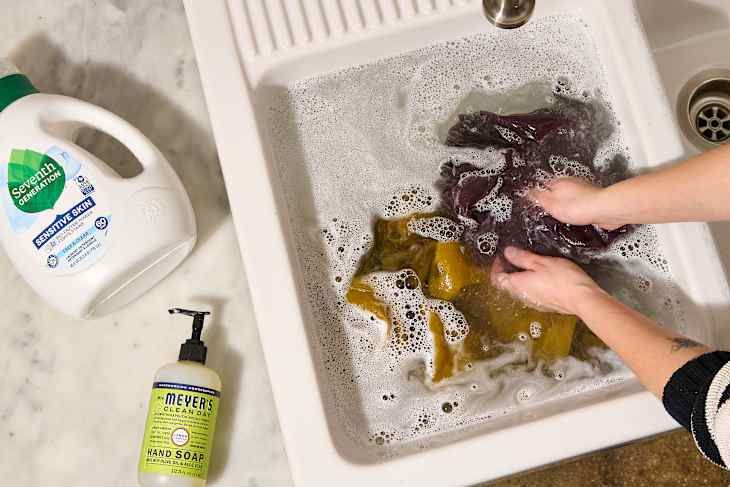
Image source: https://in.pinterest.com/pin/110971578313330347/
Baby skin is extremely delicate, much thinner and more sensitive than adult skin. Even a small mistake in laundry can lead to rashes, itching, allergies, or infections. That’s why understanding how to wash baby clothes correctly is essential for every new parent.
From the right washing time to detergent choice, water temperature, drying, and storage, this guide covers everything you need to know to keep your baby’s clothes soft, safe, and irritation-free.
Why Infant/Baby Laundry Differs from Regular Laundry
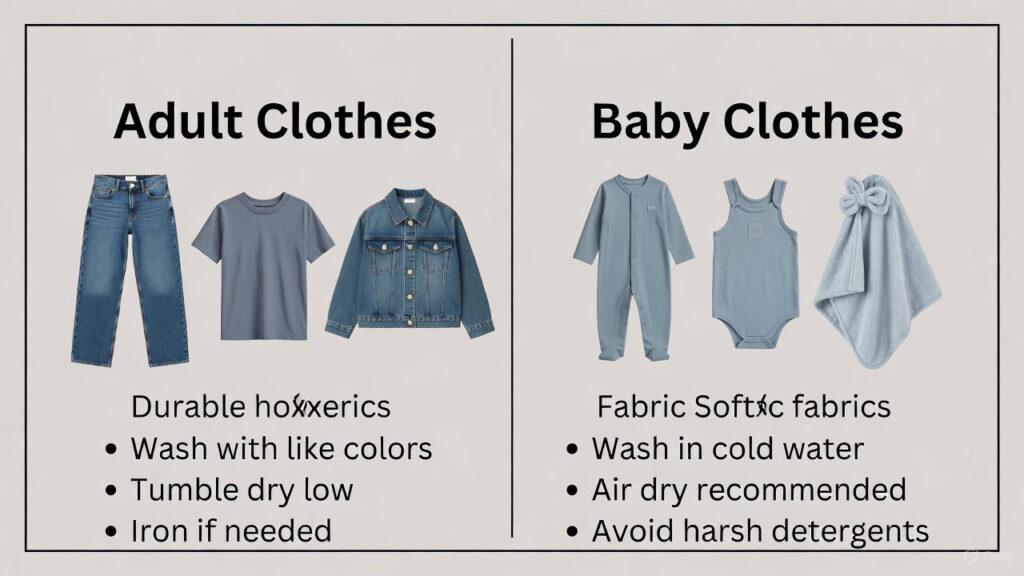
Baby clothes need extra care because a baby’s skin is very soft and sensitive. It reacts much faster than adult skin, even to small things we may not notice.
Here’s why you should be careful while washing baby clothes:
- A baby’s skin absorbs chemicals more easily
- Soap or detergent left on clothes can cause rashes or itching
- Strong smells and dyes can irritate the skin
- Harsh products can make your baby uncomfortable
That’s why learning how to wash baby clothes the right way is important. Gentle washing helps keep your baby’s clothes soft, clean, and safe, so your little one stays comfortable all day.
When to Wash Baby Clothes?
When to Wash Baby Clothes for the First Time?
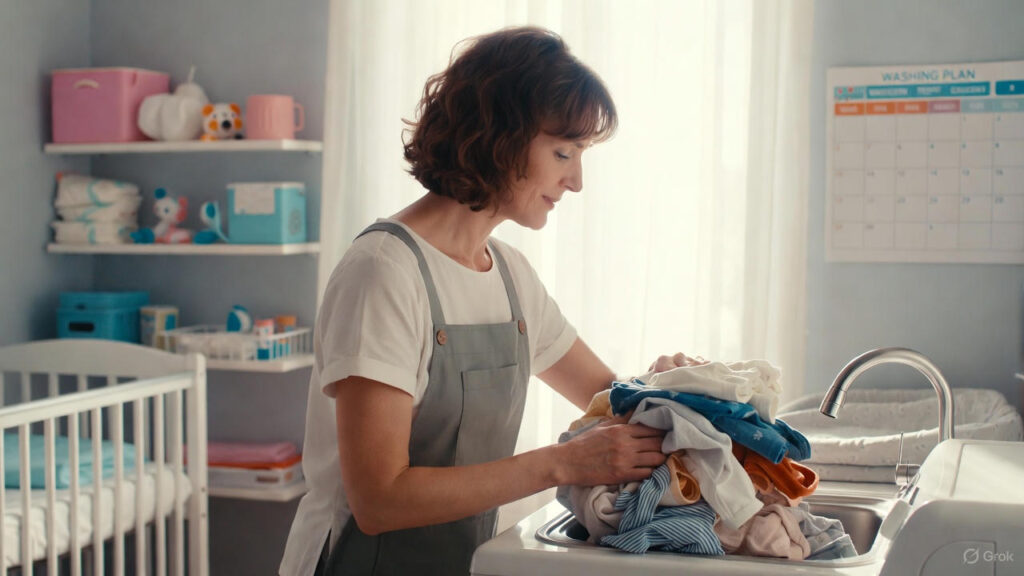
Baby clothes should always be washed before your baby wears them for the first time. Even though they look clean, brand-new clothes can still carry things that may irritate your baby’s delicate skin.
They often contain chemicals used during manufacturing. Some have dyes or fabric finishes. Others may have picked up dust while being stored or transported.
Pre-washing helps remove all these unwanted residues. It also softens the fabric, making the clothes gentler and more comfortable for your baby.
Can I Start Washing Baby Clothes at 30 Weeks?
Yes, many parents start washing baby clothes around 28–30 weeks of pregnancy. This gives enough time to wash, dry, and store clothes calmly without last-minute stress.
Washing New Baby Clothes Before First Use
Before washing:
- Remove tags, stickers, and labels
- Check for loose threads or fasteners
- Sort clothes by fabric type
Sort the clothes by fabric type so delicate items don’t get damaged. These small steps are really important when learning how to wash baby clothes safely. They help keep the clothes soft, intact, and safe for your little one.
How Frequently to Wash Baby Clothes?
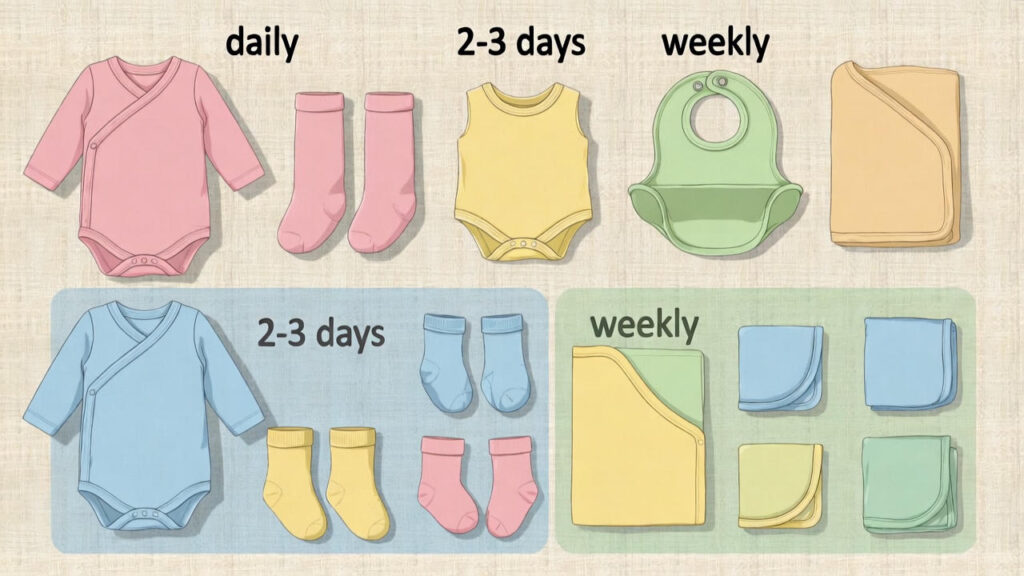
How often to wash baby clothes:
- Newborn clothes: Wash after every wear, even if they don’t look dirty. Newborns often spit up, drool, or have diaper leaks, and these small messes can quickly create bacteria and odor if left untreated. Frequent washing keeps the fabric clean and safe for their delicate skin.
- Bodysuits, rompers, undergarments: These items come in direct contact with your baby’s skin all day. Washing them daily removes sweat, skin oils, and any leftover detergent residue, ensuring the clothes stay soft and irritation-free.
- Blankets, towels, bedsheets: These can be washed every two to three days, depending on use. They may not get visibly dirty as often, but babies spend a lot of time lying or sleeping on them. Regular washing prevents germs from building up and keeps your baby’s environment hygienic.
Why frequent washing matters:
- Babies sweat more easily than adults, and even tiny damp patches on clothes can encourage bacterial growth.
- Spit-ups and diaper leaks may seem minor but can irritate sensitive skin and lead to rashes if not washed promptly.
- Regular washing prevents the accumulation of dust, germs, and detergent residue that could trigger allergies or infections.
- Keeping baby clothes fresh and soft not only protects skin but also ensures your baby is comfortable and happy throughout the day.
Washing Clothes Based on Age
- Newborns (0–3 months): Wash often, use gentle cycles
In the first three months, your baby’s skin is very soft and delicate. Clothes can get dirty from spit-ups, drool, and diaper leaks, so washing them often is important, usually after every wear for bodysuits, rompers, and undergarments. - Use a gentle cycle in the washing machine or hand wash delicate items. Gentle washing keeps clothes soft and
prevents damage to tiny threads, buttons, or snaps. Always rinse well to remove any leftover detergent, which can irritate newborn skin. - Infants & toddlers: Wash regularly, still use baby-safe detergent
As your baby grows and starts crawling, eating, or playing, clothes get dirty in new ways, food spills, outdoor dust, or messy play. You may not need to wash every item after one use, but regular washing is still important to keep clothes clean and safe. - Always stick to baby-friendly, fragrance-free detergent. Even older babies still have sensitive skin, so avoiding harsh chemicals and strong smells helps prevent rashes and keeps them comfortable.
Safe Fabric to Choose for Clothes for Your Baby
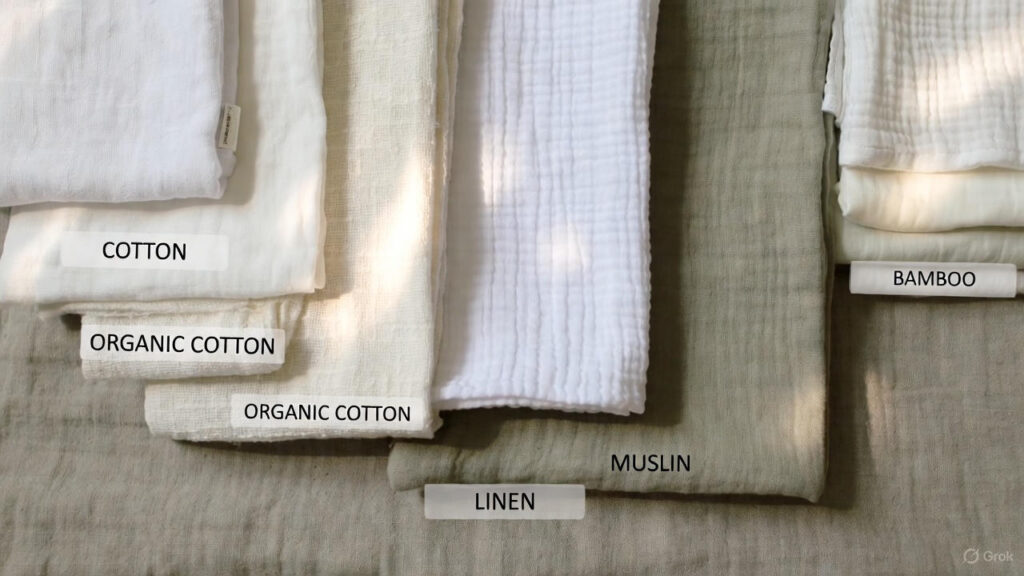
Choosing the right fabric reduces irritation even before you think about how to wash baby clothes.
Best fabrics include:
- Cotton: Soft and breathable, perfect for keeping baby comfortable all day.
- Organic cotton: Free from chemicals, gentle on sensitive skin.
- Muslin: Lightweight and airy, ideal for layering or warm weather.
- Bamboo fabric: Naturally soft and moisture-wicking, helps prevent rashes.
- Linen (especially for warm climates): Keeps babies cool and dry in hot weather.
- Avoid synthetic fabrics: They trap heat and moisture, which can irritate delicate skin.
Avoid synthetic fabrics that trap heat and moisture.
Preparing Baby Clothes for Washing
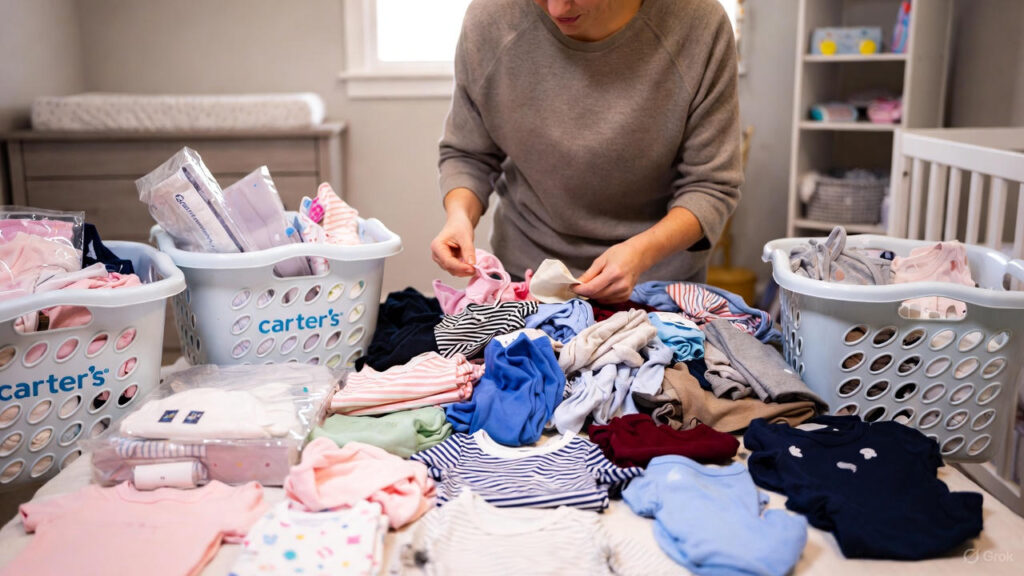
Reading and Following Care Labels
Care labels guide you on:
- Water temperature:
The label tells you what water to use. Lukewarm water (around 30–40°C) is usually best for baby clothes, hot enough to clean but gentle on soft skin. - Washing method:
This shows if you should wash by hand or in the machine. Using the right method keeps clothes from stretching, fading, or getting damaged. Gentle cycles are best for baby clothes. - Drying instructions:
The label tells you if the clothes can go in the dryer or should be air-dried. Drying properly keeps clothes soft, stops shrinking, and helps prevent germs. Sunlight also naturally cleans and freshens baby clothes.
Ignoring labels can damage fabric and irritate skin.
Separating Baby Clothes from Adult Laundry
Always wash baby clothes separately:
- Adult clothes carry sweat, bacteria, and strong detergent residue
- Separate hampers or wash loads reduce contamination
Close zippers, snaps, and Velcro to:
- Prevent fabric damage
- Avoid scratching delicate baby clothes
Taking these simple steps makes sure your baby’s clothes stay clean, soft, and safe for their sensitive skin.
Choosing the Right Detergent and Products
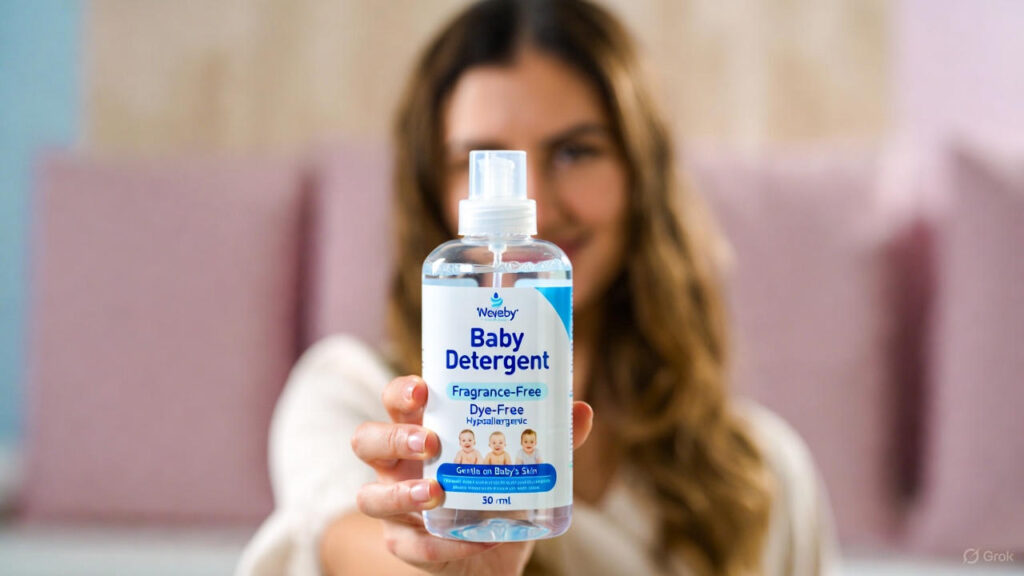
What Detergent to Use to Wash Baby Clothes
When deciding how to wash baby clothes, detergent choice is critical.
Use detergents that are:
- Baby-friendly
- Fragrance-free
- Dye-free
- Non-bio and gentle
Liquid detergents are usually safer than powders because they dissolve completely, leaving little to no residue. Less residue means less chance of irritation, redness, or allergic reactions, keeping your baby’s clothes truly safe to wear.
Powder vs Liquid Detergent for Baby Clothes
- Liquid detergent is usually gentler on delicate baby clothes. It dissolves easily in water, which means it rinses out completely and doesn’t leave any leftover residue that could irritate your baby’s sensitive skin.
- Powder detergent, on the other hand, can sometimes leave tiny traces behind, especially if your water is hard. That residue can make clothes feel stiff and may even cause rashes or redness. For this reason, many parents prefer liquid detergents for baby laundry.
Avoiding Fabric Softeners and Harsh Chemicals
Avoid:
- Fabric softeners
- Dryer sheets
- Bleach
- Strong stain removers
These products can cause allergies and skin reactions.
How to Wash Baby Clothes?
How to Wash Newborn Baby Clothes in a Washing Machine
When washing baby clothes in a machine, it’s best to use a gentle cycle. This keeps the clothes soft and protects delicate fabrics from stretching or getting damaged.
- Mild detergent: Using a gentle, baby-friendly detergent helps prevent rashes or irritation.
- Low to moderate spin: A slower spin cycle reduces wear and tear on snaps, buttons, and soft fabrics.
- Extra rinse if available: This ensures all detergent is washed out, leaving no residue that could irritate your baby’s skin.
Following these simple steps is one of the safest ways to wash baby clothes every day, keeping them clean, soft, and safe for your little one.
Front Load vs Top Load Washing Machine
The type of washing machine you use can make a difference for baby clothes. Front load machines are gentle on fabrics and do a better job rinsing out detergent. This keeps clothes soft and comfy. Top load machines are convenient and easy to use. But you need to be careful with detergent. Too much can leave residue and irritate your baby’s sensitive skin.
Washing Machine Settings and Cycles
The right settings matter. Use a gentle or delicate cycle to protect soft fabrics and prevent stretching. Double rinse is a must, it makes sure all detergent is washed away, reducing the chance of rashes. Avoid heavy or quick wash modes. They can be rough on snaps, buttons, and soft fabrics.
Water Temperature
Water temperature is key. 30–40°C is perfect. Warm enough to clean thoroughly, but gentle on delicate fabrics. Hot water? It can shrink clothes or wear them out fast. Cold water? It might not remove all germs. Getting this right is one of the easiest ways to keep baby clothes clean, soft, and safe.
How to Wash Baby Clothes by Hand
Hand washing is gentle and perfect for delicate baby clothes. Start with lukewarm water, not too hot, not too cold. Add a small amount of mild, baby-friendly detergent and let the clothes soak for a few minutes.
Gently rub the fabric where it’s soiled. Then rinse thoroughly, several times, to make sure no detergent is left behind. This method keeps delicate items soft, clean, and safe for your baby’s sensitive skin.
Stain Removal and Hygiene
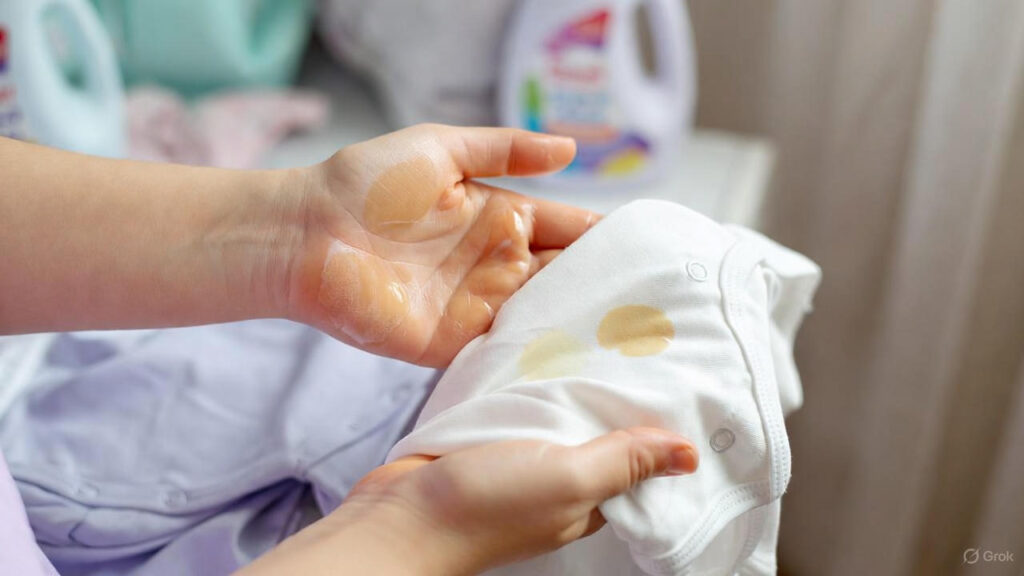
Pre-Treating Stains Immediately
Stains happen, milk, spit-up, or diaper accidents are part of life with a baby. The sooner you treat them, the easier they are to remove. Rinse the stained area with cold water first. Then use a gentle, baby-safe stain remover. Avoid scrubbing too hard, as this can damage delicate fabrics.
Tips for Specific Items (Baby Rompers, Bibs)
Some clothes need extra attention. Rompers and bibs are in direct contact with your baby’s mouth and food, so they can get dirty quickly. Pre-treat these items carefully and wash them thoroughly to keep your baby clean and comfortable.
Disinfecting or Sanitizing Baby Clothes
Sometimes, sanitizing baby clothes is helpful. For example:
- During illness
- For cloth diapers
- In humid or damp weather
But remember, you don’t need to disinfect every day. Occasional sanitizing is enough, unless your pediatrician suggests otherwise.
Drying Baby Clothes Safely
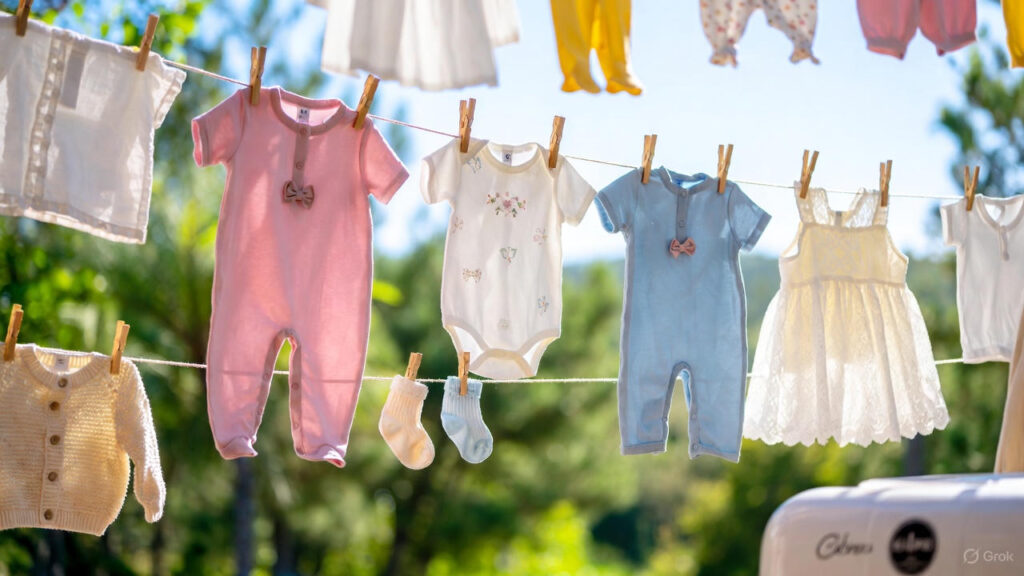
Drying Methods
Sun drying is the best and most natural way to dry baby clothes. The sunlight not only dries them but also helps kill bacteria naturally.
If you’re short on time, you can tumble dry briefly to keep clothes soft. But avoid drying clothes directly on radiators or heaters, as the heat can damage delicate fabrics and make them stiff.
Maintaining Softness in Baby Clothes
- Avoid detergent buildup
- Wash at low temperatures
- Use white vinegar occasionally instead of softener
- Dehumidifiers help in monsoon seasons
Storing Baby Clothes After Washing
Only put clothes away once they are completely dry. Damp clothes can develop mold or a musty smell. Use clean, dry cupboards or drawers to keep them fresh.
Avoid storing clothes with strong-smelling repellents, as these can irritate your baby’s sensitive skin. Proper storage is a simple but important step to keep baby clothes clean and hygienic after learning how to wash baby clothes correctly.
Special Care for Sensitive Skin
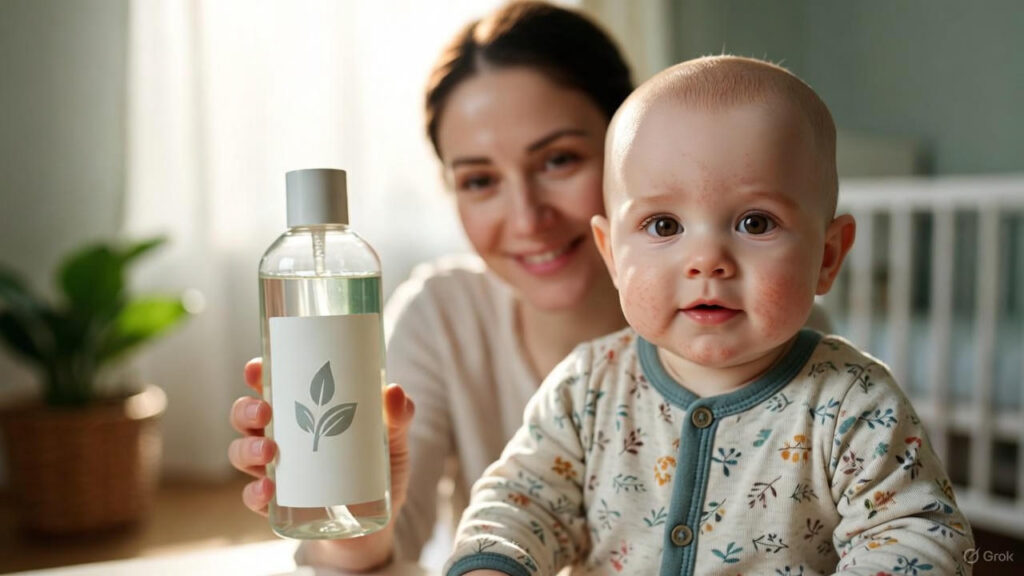
If your baby has eczema or allergies, laundry needs a little extra care. The right washing habits can help prevent rashes and keep their skin happy.
- Use hypoallergenic detergent: These don’t have harsh chemicals, dyes, or strong smells, so they’re gentle on sensitive skin.
- Rinse extra: Running an extra rinse makes sure no detergent is left on the clothes, which can cause irritation.
- Keep it simple: Avoid fabric softeners, strong stain removers, or scented products that can bother delicate skin.
Doing these small things keeps baby clothes safe, soft, and comfortable for your little one.
Laundry Habits and Skin Irritation
Incorrect washing habits can worsen:
- Rashes
- Redness
- Excessive itching
Signs Clothes Are Causing Skin Issues
- Your baby might get fussy or irritable after putting on certain clothes.
- You may notice red or irritated patches on the skin where the clothes touch.
These are signs that your baby’s clothes could be causing discomfort, and it’s a cue to check the fabric, detergent, or washing method.
Climate-Based Washing Tips
- Monsoon: Make sure baby clothes dry completely. Damp clothes can grow mold or bacteria, which can irritate your baby’s skin.
- Hot and humid weather: Wash clothes more often, and choose lightweight, breathable fabrics. This keeps your baby comfortable and helps prevent rashes caused by sweat or heat.
Common Mistakes to Avoid During Baby Clothes Laundry
- Using regular or scented detergents: Adult detergents can be too strong and may irritate your baby’s soft skin. Use a mild, baby-safe detergent instead.
- Skipping the pre-wash for new clothes: New clothes can have leftover chemicals, dyes, or dust. Washing them first makes them softer and safer for your baby.
- Washing baby clothes with adult laundry: Adult clothes carry sweat, dirt, and strong detergent residue. Keep baby clothes separate to avoid germs and irritation.
- Using fabric softeners or bleach: These can irritate sensitive skin and damage soft fabrics. It’s better to skip them for baby laundry.
- Not rinsing clothes properly: Leftover detergent can cause rashes. Always rinse clothes well, or run an extra rinse if you can.
Avoiding these mistakes improves how you wash baby clothes safely.
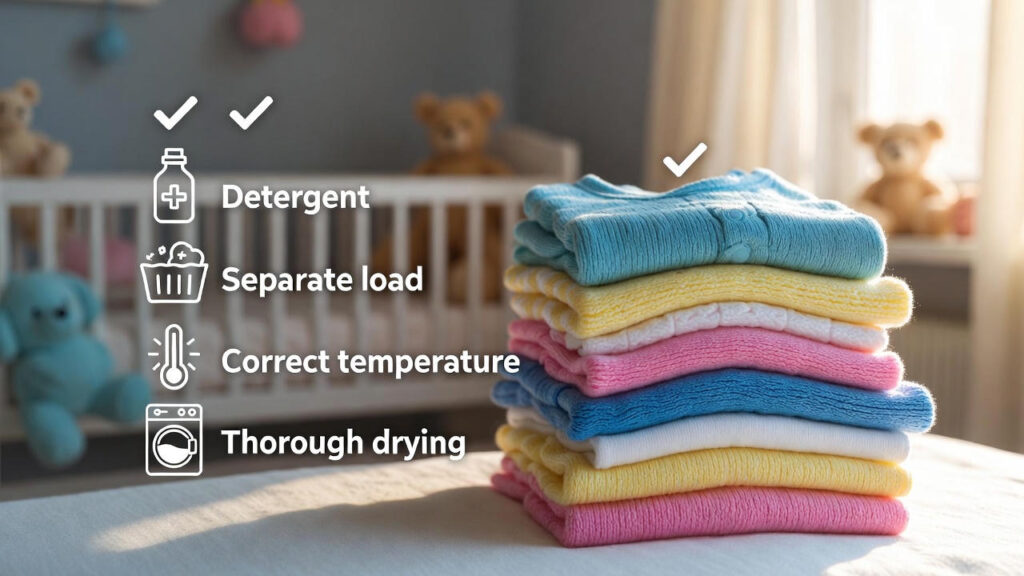
Baby Clothes Laundry Checklist
- Gentle detergent: Always use a mild, baby-safe detergent to protect your baby’s soft skin.
- Separate load: Wash baby clothes separately from adult clothes to avoid germs and harsh residue.
- Correct temperature: Stick to lukewarm water (around 30–40°C) to clean clothes without shrinking or damaging them.
- Thorough drying: Make sure clothes are completely dry before storing to prevent mold, bacteria, or musty smells.
Frequently Asked Questions (FAQs)
1. Do I need to wash baby clothes before the first wear?
Yes! New clothes can have chemicals, dyes, or dust. Washing them first makes them soft and safe for your baby’s delicate skin.
2. How often should I wash newborn clothes?
Newborn clothes should be washed after every wear. Babies spit up, drool, and have diaper leaks, so frequent washing keeps clothes clean and bacteria-free.
3. Can I wash baby clothes with the family laundry?
It’s best not to. Adult clothes carry dirt, sweat, and stronger detergent residue, which can irritate baby skin. Keep baby laundry separate.
4. Which detergent is safest for baby clothes?
Use mild, baby-friendly, fragrance-free, and dye-free detergent. Liquid detergents are preferred because they rinse out more easily.
5. What water temperature is best for washing baby clothes?
Lukewarm water, around 30–40°C, is ideal. Hot water can shrink clothes, and cold water may not remove germs properly.
6. Can I use fabric softeners or bleach?
No. Fabric softeners, strong stain removers, and bleach can irritate baby skin and damage delicate fabrics.
7. How should I dry baby clothes?
Sun drying is best, it naturally kills bacteria. You can also tumble dry briefly for softness, but avoid radiators or high heat.
8. What if my baby has sensitive skin or eczema?
Use hypoallergenic detergent, run extra rinse cycles, and avoid scented products. This keeps clothes gentle and safe.
9. How do I handle stains on baby clothes?
Treat stains like milk, spit-up, or diaper messes immediately. Rinse with cold water and use a gentle, baby-safe stain remover.
10. Can I sanitize baby clothes regularly?
Only occasionally, during illness, for cloth diapers, or in humid weather. Daily disinfecting isn’t necessary and may be harsh on clothes.
Conclusion
Knowing how to wash baby clothes the right way keeps your baby safe from rashes, allergies, and infections. Using gentle detergent, the right water temperature, rinsing well, and drying properly makes a big difference. With these simple laundry habits, your baby stays comfortable, clean, and healthy every day.