

- Why Different Suits Require Different Dry Cleaning Treatment
- Fabric Matters: Why Different Suit Fabrics Need Different Dry Cleaning Treatment
- Wool, Linen, and Silk Suits: How Dry Cleaning Methods Change
- Suit Construction and Stitching: Why Some Suits Need Special Dry Cleaning Care
- Fabric Colour and Finish: Why Dry Cleaning Affects Suits Differently
- Seasonal Suits and Their Dry Cleaning Needs
- How to Choose the Right Dry Cleaner for Your Custom Suit
- Common Mistakes That Damage Suits During Cleaning
- Home Care vs Professional Dry Cleaning for Suits
- Conclusion
Introduction
A good suit is meant to last for years. But many suits start losing their shape, softness, or sharp finish much earlier than expected. Most people assume this happens because the suit was worn too often. In reality, the damage usually starts during cleaning.
Suits are not simple garments. They are made with different fabrics, internal layers, linings, and finishes. Each of these reacts differently to heat, solvents, moisture, and movement. When all suits are cleaned the same way, problems slowly begin to show. This is why different suits require different dry cleaning treatment.
In garment care environments, suits are often brought in only after something feels wrong. The fabric looks clean, but the fit has changed. In most cases, the damage started during cleaning, not wear.
Why Different Suits Require Different Dry Cleaning Treatment

Image source: https://share.google/6yr0HFBhhPgIJbvhe
Dry cleaning is often seen as a one-step solution. Drop the suit, pick it up clean. But proper suit care is much more than stain removal.
In professional cleaning settings, suits are often brought in after something has already gone wrong. The fabric may look clean, but the fit feels off. The lapels may not sit right. The chest may feel stiff. These issues usually come from incorrect cleaning methods, not from wear.
Different suits require different dry cleaning treatment because no two suits are built the same. Fabric, structure, colour, and even season all influence how a suit should be cleaned.
Also see: How Often You Should Dry Clean a Suit?
Fabric Matters: Why Different Suit Fabrics Need Different Dry Cleaning Treatment
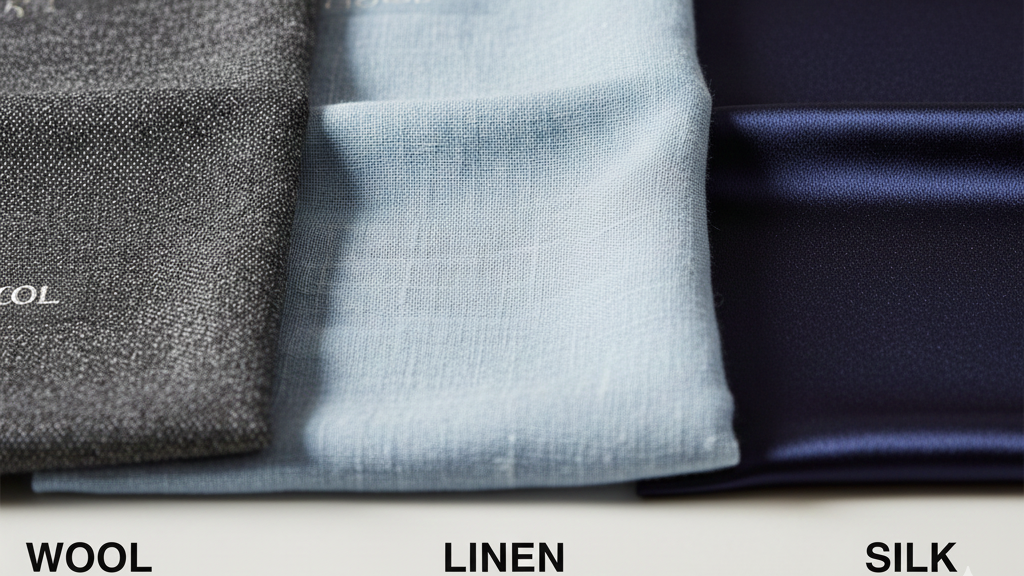
Fabric is where everything begins.
Wool suits are strong but sensitive. Wool fibres naturally stretch and return to shape, which is why suits drape so well. But wool does not handle excessive heat or rough movement. Cleaned too aggressively, it slowly tightens. At first, it feels slightly stiff. Over time, the suit loses comfort and flexibility.
Linen suits behave very differently. Linen absorbs solvents quickly and weakens with repeated cleaning. When linen is over-cleaned, the fabric starts to look worn and lifeless, even if the suit is relatively new.
Blended fabric suits create another challenge. Each fibre inside the fabric reacts differently during cleaning. One fibre may shrink slightly while another stays relaxed. This imbalance causes pulling at seams and changes how the suit sits on the body.
This fabric behaviour is a major reason why different suits require different dry cleaning treatment.
Wool, Linen, and Silk Suits: How Dry Cleaning Methods Change
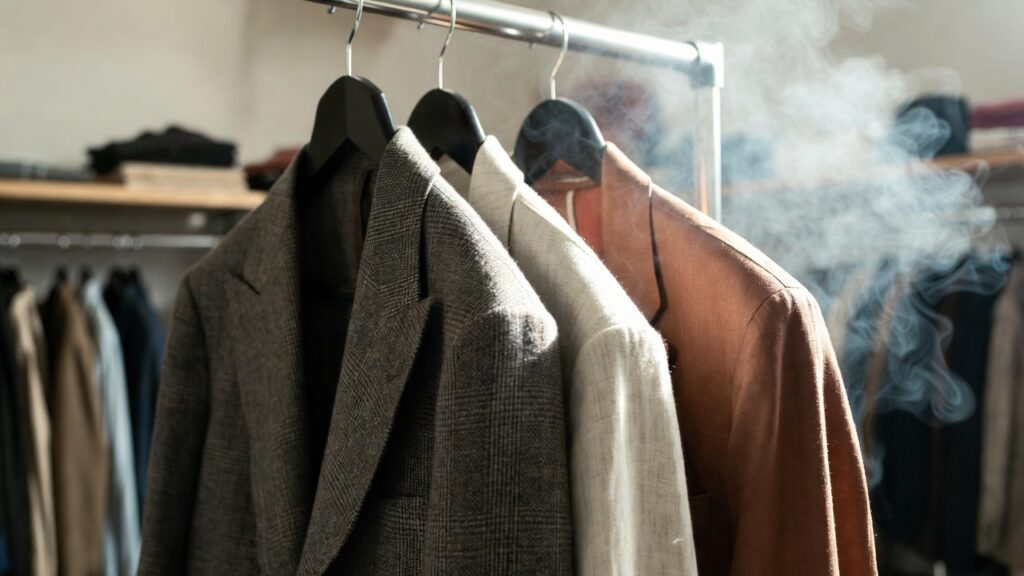
Not all suits should go through the same cleaning cycle.
Wool suits need gentle agitation and controlled drying. Too much movement inside the machine affects how the fabric falls and holds shape.
Linen suits need shorter cleaning cycles. Long exposure to solvents weakens the fibre and increases permanent creasing.
Silk-blend suits require the most care. Silk reacts quickly to chemicals. Even mild treatment can dull the surface or leave marks that never fully disappear.
Professional cleaners adjust solvent strength, temperature, and cycle length based on fabric. This is exactly why different suits require different dry cleaning treatment, even when they look similar from the outside.
Suit Construction and Stitching: Why Some Suits Need Special Dry Cleaning Care
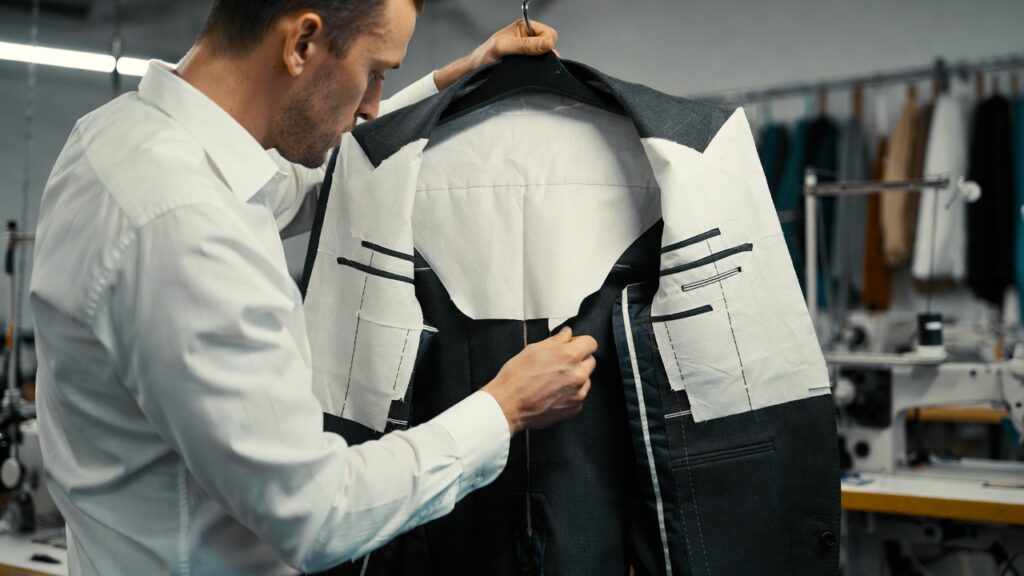
Much of a suit’s value lies inside, where you can’t see it.
Some suits are fully canvassed, meaning layers of canvas are stitched into the chest and lapels. These layers give structure and shape. Excess heat or moisture can cause them to shift, permanently changing the fit.
Other suits are fused, where adhesive bonds hold the structure together. Strong heat can weaken this bond, leading to bubbling or rippling across the chest.
Hand stitching is also sensitive. Too much agitation loosens stitches, especially around lapels and shoulders.
Because construction varies so widely, different suits require different dry cleaning treatment to protect their internal structure.
Fabric Colour and Finish: Why Dry Cleaning Affects Suits Differently
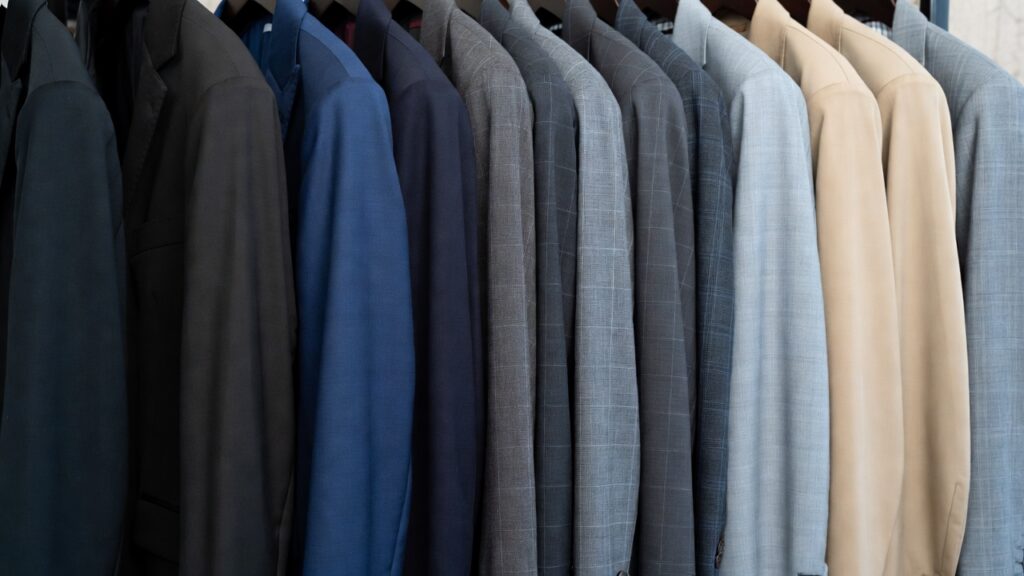
Colour and finish matter more than most people realise.
Dark suits are more prone to fading if exposed to strong solvents. Light-coloured suits show stains easily and can yellow if cleaned incorrectly.
Some suits have special surface finishes that give them a smooth or matte appearance. Harsh cleaning removes these finishes, leaving the fabric dull and flat.
In professional care environments, cleaners often test for dye stability before cleaning. This step helps prevent colour loss and uneven fading.
Seasonal Suits and Their Dry Cleaning Needs
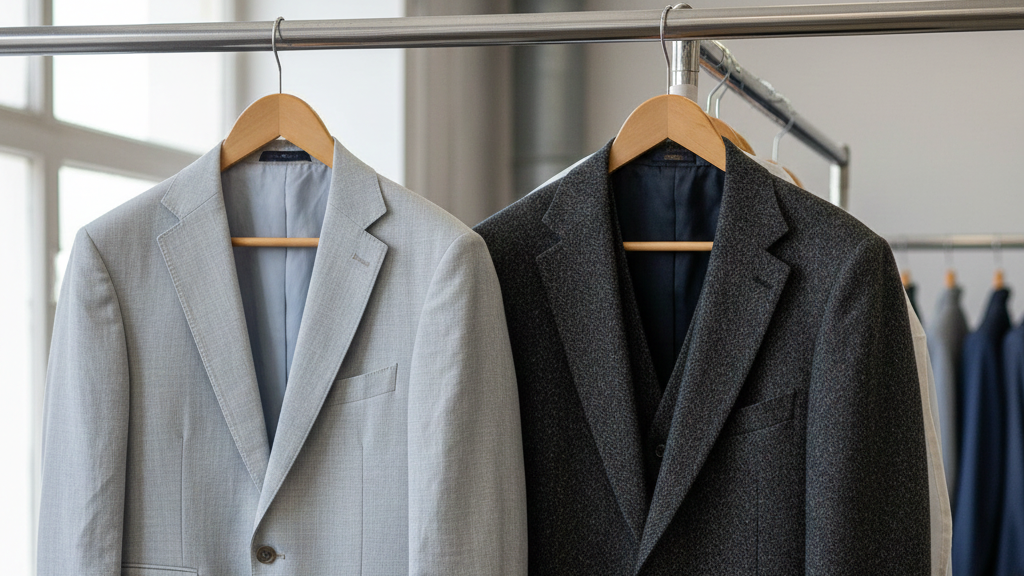
Suits designed for different seasons are built differently.
Summer suits are lighter, with softer linings and breathable fabrics. Strong solvents can weaken these materials quickly.
Winter suits are heavier and layered. They trap moisture, oils, and odours deep inside the fabric. Incorrect cleaning may leave residue behind, causing stiffness over time.
Seasonal differences are another reason why different suits require different dry cleaning treatment.
How to Choose the Right Dry Cleaner for Your Custom Suit : The Wash4you Experience
Not every dry cleaner treats suits the same way.
A good dry cleaner will inspect the suit first. They will check the fabric, construction, lining, and stain type before deciding on a cleaning method.
If a cleaner uses one standard process for every garment, your suit is at risk. Custom and premium suits should never be cleaned without assessment.
Choosing the right professional is essential when different suits require different dry cleaning treatment. Experienced dry cleaners inspect the suit first, because fabric, construction, and wear patterns decide how the suit should be treated.
Common Mistakes That Damage Suits During Cleaning
Image source: https://share.google/STTp9rLDB165dnNSe
Many suits are damaged because of small, avoidable mistakes.
Cleaning Suits Too Frequently
Dry cleaning after every wear slowly weakens suit fabric. Each cycle exposes the suit to solvents and movement that reduce elasticity over time. Most suits only need cleaning when there’s visible dirt or odour.
Using High Heat During Finishing
Excess heat during pressing or steaming can flatten fabric and disturb a suit’s internal structure. In fused or tailored suits, this often leads to bubbling or loss of shape.
Ignoring Fabric and Construction Differences
Wool, linen, and blended suits react differently to cleaning. When fabric and construction are ignored, safe methods for one suit can quietly damage another.
Skipping Inspection Before Cleaning
Without inspection, cleaners may over-treat stains or use unsuitable solvents. This increases the risk of fabric stress and permanent surface damage.
Storing Suits Immediately After Cleaning Without Airing
Freshly cleaned suits retain moisture and solvent residue. Storing them immediately traps this inside the fabric, leading to stiffness or odour over time.
In professional cleaning environments, these mistakes are among the most common reasons suits lose their original shape earlier than expected. These mistakes weaken fabric and distort structure over time. Avoiding them helps a suit age properly.
Home Care vs Professional Dry Cleaning for Suits : The Wash4you Experience
Home washing exposes suits to water saturation, agitation, and uneven drying. These conditions affect both fabric and internal structure.
Professional dry cleaning limits friction and controls temperature. This makes it safer for most suits, especially wool, silk blends, tailored, and designer pieces.
If the goal is to protect fit and finish, professional care is essential when different suits require different dry cleaning treatment.
Conclusion
Suits are carefully constructed garments. They are designed to hold shape, structure, and style over time. When cleaned incorrectly, the damage often appears slowly, but it is difficult to reverse.
Understanding why different suits require different dry cleaning treatment helps prevent shape loss, fabric fatigue, and colour damage. Suit care is not about cleaning more often. It is about cleaning correctly.
With the right treatment, a well-made suit keeps its structure, comfort, and sharp appearance for years.