- Introduction
- Can Dry Cleaning Remove Old Stains?
- Types of Stains Dry Cleaning Can Remove
- Types of Fabrics Where Stains Are Hard to Remove
- How to Prepare Clothes Before Visiting a Dry Cleaner
- Types of Dry Cleaning Treatments for Different Stains
- FAQs About Dry Cleaning and Old Stains
- Final Thoughts
Introduction
We’ve all faced it. That favourite shirt, saree, or blazer you rarely wear suddenly has a faint yellow patch, a coffee spill, or an oil stain that refuses to budge. You might have tried washing it multiple times, but the mark is still there. At this point, it’s natural to wonder: can dry cleaning remove old stains, or is it already too late?
The short answer: yes, but with some conditions. Dry cleaning is highly effective at tackling set-in stains, but the success depends on the type of fabric, the chemical nature of the stain, how long it has been there, and whether it has been exposed to heat or harsh washing. Let’s take a closer look at how professional stain removal works and what you can realistically expect.
Can Dry Cleaning Remove Old Stains?
The truth is that professional dry cleaners often succeed where home washing fails. Dry cleaning uses solvents instead of water, which means oil-based stains, grease, and even some protein stains respond better than they would with normal washing.
However, several factors determine the outcome:
- Fabric type: Some fabrics absorb stains more readily or are more delicate, limiting treatment options.
- Stain age: The older a stain, the more time it has had to chemically bond with the fabric.
- Chemical composition: Coffee, wine, oil, ink, and turmeric all behave differently and require different treatments.
- Previous exposure: Heat, ironing, and hot water can set stains permanently.
For example, an oil stain on silk that hasn’t been washed may respond very well to dry cleaning, whereas sweat stains on cotton that have been ironed repeatedly may only lighten slightly. That’s why many people ask, can dry cleaners remove set-in stains?—and the answer is usually yes, but not always fully.
Types of Stains Dry Cleaning Can Remove
Also see: Can Dry Cleaning Remove Oil and Grease Stains?
Dry cleaning is most effective on stains that home laundering struggles with, especially because it uses specialized solvents, enzymes, and pre-treatment methods.
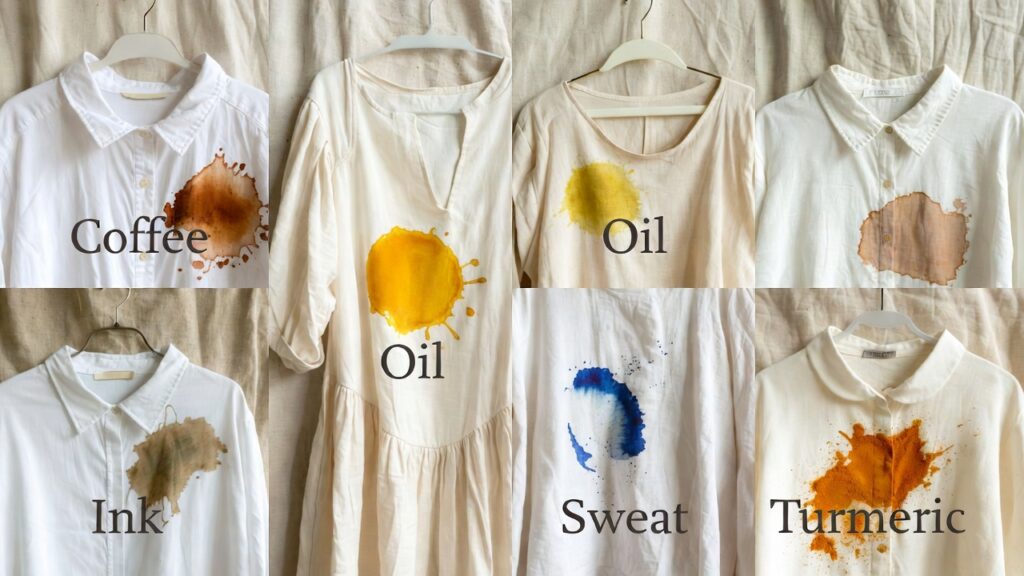
Oil-Based Stains
Grease, butter, cooking oil, makeup, and body oils are some of the easiest to remove. Solvents dissolve these substances efficiently, which is why dry cleaning remove oil stains more reliably than washing. Collar and cuff buildup, in particular, often responds exceptionally well.
Coffee, Tea, and Beverage Stains
Tannin-based stains like coffee and tea can usually be lifted with proper pre-treatment. Professional cleaners often succeed with dry cleaning remove coffee stains, even if they have been there for weeks, although oxidation may slightly yellow light fabrics.
Ink and Dye Transfer
Ballpoint ink and some dyes can often be treated effectively. Dry cleaning ink stain removal works best if the stain hasn’t spread or been heat-set. Older or permanent ink marks are more challenging, which leads many people to ask: can dry cleaning get out old ink stains? Results vary, but professional techniques often achieve significant fading.
Turmeric and Mehendi Stains
Turmeric, curry, and mehendi are among the toughest stains, particularly in India. Dry cleaning turmeric stain removal and dry cleaning mehendi stain removal require specialized chemical treatment. While complete removal isn’t guaranteed, fading is usually very noticeable.
Types of Fabrics Where Stains Are Hard to Remove
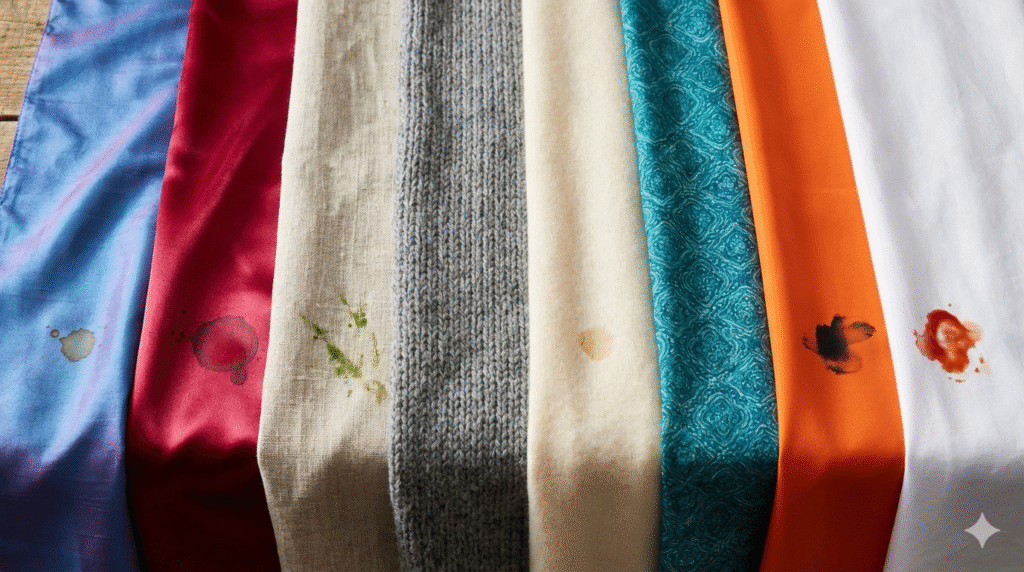
The type of fabric plays a huge role in how successful dry cleaning can be. Some fabrics trap stains deeply or react poorly to solvents.
Some fabrics hold stains more tightly than others. Knowing this helps you understand what a dry cleaner can do.
Silk and Satin
These are delicate fabrics. They absorb stains quickly. Aggressive cleaning can cause color to fade. Sometimes cleaners choose to lighten the stain rather than risk damage.
Linen
Linen soaks up stains easily. Marks can spread and turn yellow over time, which makes them harder to remove.
Wool and Cashmere
Sweat and oils stick strongly to these fibers. Heat can set stains permanently. Old stains on wool or cashmere are often tricky.
Rayon and Viscose
These fabrics weaken when wet. Stains can spread if cleaned the wrong way.
Polyester and Synthetic Blends
Oil-based stains cling to synthetic fabrics. They need strong solvent treatments to come out.
White and Light-Colored Fabrics
Every stain shows clearly on white or pale fabrics. Dry cleaners can remove most marks, but yellowing that has set over time may only fade, not disappear completely.
How to Immediately Treat Clothes Before Giving Them to Dry Cleaners
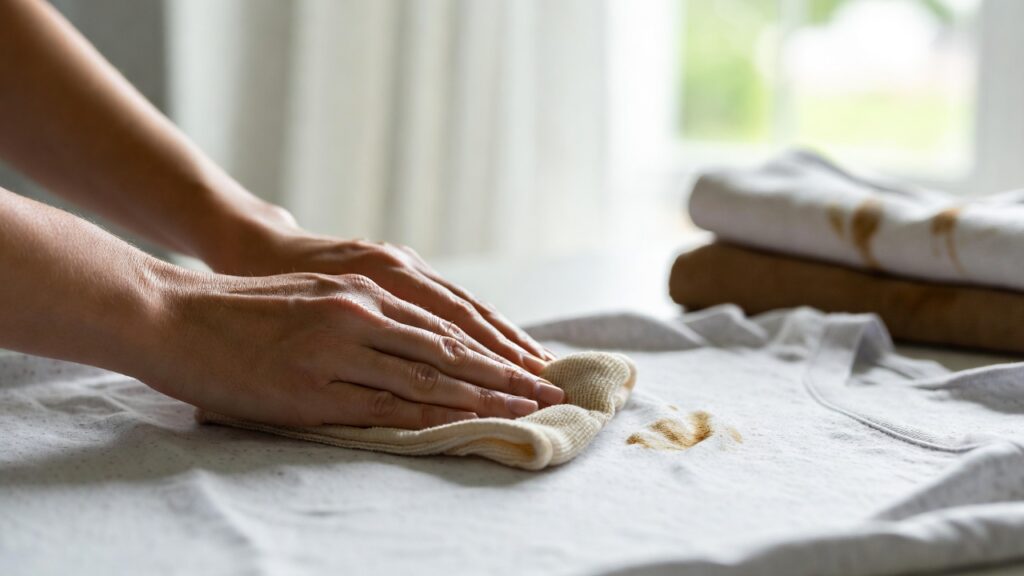
What you do before giving your clothes to a dry cleaner can make a big difference. Even pros have limits if the stain has been handled the wrong way. Here’s a simple guide:
Do This
- Blot stains gently.
Don’t rub. Press a clean cloth or paper towel on the stain to lift it. For example, if you spill coffee on a blouse, blot it gently instead of scrubbing. - Keep clothes away from heat and sunlight.
Heat makes stains stick. Don’t put stained clothes near radiators, in the dryer, or under the sun. - Tell the cleaner what caused the stain.
Oil, ink, turmeric, or coffee—all need different treatment. Letting your cleaner know helps them choose the right method.
Avoid This
- Using hot water or scrubbing.
Hot water can “cook” the stain. Scrubbing spreads it and makes it worse. - Trying home remedies.
Things like lemon, baking soda, or bleach can damage delicate fabrics. They often make stains harder to remove. - Ironing stained clothes.
Heat sets stains permanently. Never iron a garment with a fresh or old stain.
Early intervention always improves the likelihood of success.
Types of Dry Cleaning Treatments for Different Stains
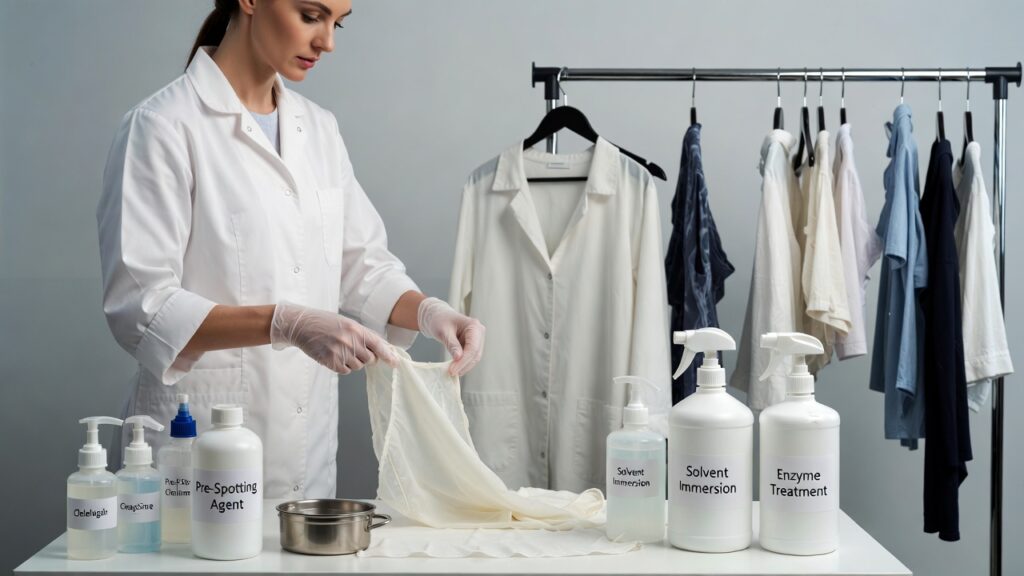
Professional cleaners don’t just dunk your clothes in chemicals. They assess each stain and fabric carefully, then choose the appropriate method:
Pre-Spotting Treatments
Before the actual dry cleaning begins, professionals often treat the stain directly. This is called pre-spotting. The cleaner identifies the type of stain—oil, ink, coffee, or sweat—and applies a special chemical solution to break it down. Think of it as giving the stain a “head start” against removal. For example, a coffee stain on a silk blouse may be lightly dabbed with a solvent before the full cleaning process begins to prevent spreading.
Solvent Immersion
This is the core of dry cleaning. Garments are soaked in a special solvent instead of water, which dissolves oils, grease, and lotions. Unlike water-based washing, this method doesn’t swell fibers or set the stain further. That’s why dry cleaning remove oil stains better than home washing. A leather jacket with a butter mark or a wool blazer with a sweat stain can benefit greatly from solvent immersion.
Enzyme Treatments
Some stains are protein-based—think sweat, blood, egg, or dairy. Enzymes are natural “stain-eating” proteins that break down these stains without harming the garment. For example, a yellow sweat ring around a cotton collar or a small blood stain on a silk scarf can often be pre-treated with enzyme solutions to lift the stain more effectively before dry cleaning.
Rust and Mineral Treatments
Metal buttons, zippers, or water deposits can leave rust or mineral stains that are difficult to remove. Professional cleaners use special chemical solutions that neutralize rust without damaging the fabric. For instance, a rust mark on a white cotton shirt or a mineral stain on a linen dress can be treated so it fades significantly, something home detergents rarely achieve.
Controlled Bleaching
This is used mainly on white or very light fabrics. Controlled bleaching helps lift yellowing, coffee, or tea stains without affecting the overall color. Professionals carefully select the bleach type and concentration so the fabric isn’t weakened. For example, a white silk shirt with a coffee spill can often have the stain lightened while keeping the rest of the shirt intact.
Eco-Friendly Dry Cleaning Stains
Many dry cleaners now use gentler, environmentally conscious solvents instead of traditional chemicals like perchloroethylene. These are safe for delicate fabrics, babies’ clothes, and people with sensitive skin. They also work surprisingly well on stains while reducing chemical exposure. For example, a delicate chiffon dress with a light turmeric mark can be treated safely without harsh chemicals.
This expertise is why stubborn stain removal dry cleaning is far more effective than DIY methods.
FAQs About Dry Cleaning and Old Stains
Also see: https://www.quora.com/Can-dry-cleaning-remove-dried-or-set-in-stains-from-a-dress-shirt
Can dry cleaning remove old stains from clothes?
Yes. Old stains such as oil, coffee, ink, and sweat can often be removed if they haven’t been heat-set or chemically altered. While some older stains may not disappear completely, professional cleaning usually significantly fades them, restoring the garment’s appearance.
Can dry cleaners remove stains from white clothes?
White clothes show stains more clearly, but professional cleaning is very effective. Coffee, sweat, and rust stains can often be lightened or removed. However, long-term yellowing may only fade, not fully disappear.
Does dry cleaning remove colour stains from clothes?
Partially. Dye-transfer or colour stains can often be reduced, but complete removal depends on the dye type and fabric. Early treatment improves results, especially on delicate garments.
Does dry cleaning remove rust stains?
Yes. Professional cleaners use chemical treatments specifically designed for rust. Home methods often fail or damage the fabric, so it’s safer to rely on professional expertise.
What items should never be dry cleaned?
Clothes with unstable dyes, rubber trims, sequins, or certain synthetic coatings may be damaged. Always check care labels and consult your dry cleaner before cleaning.
Can dry cleaning ruin clothes?
Improper handling can damage garments, especially delicate fabrics. Experienced cleaners minimize risk by testing treatments on inconspicuous areas and using fabric-appropriate solvents.
Are dry cleaners better at removing old stains?
Absolutely. Professional dry cleaning combines experience, specialized equipment, and chemical knowledge to remove stains that home washing cannot touch.
How do you remove years-old stains?
Older stains are more difficult. A professional may partially remove them or fade them significantly, depending on the fabric, stain type, and previous exposure. Early professional intervention always increases the chance of success.
Will dry cleaning remove collar stains?
Yes. Sweat and oil buildup on collars respond very well to targeted dry cleaning treatments, often restoring collars close to their original appearance.
Can Vanish remove old stains?
It may help with mild stains on sturdy fabrics, but it’s risky for delicate or dry-clean-only garments. Professional dry cleaning is safer and more effective.
Final Thoughts
So, can dry cleaning remove old stains? The answer is yes—but not magically. Success depends on the stain type, age, fabric, and whether it’s been heat-set or chemically altered.
Dry cleaning is a science as much as it is a service. Solvents, pre-treatment, and experience combine to tackle stains home methods often fail to touch. Some stains vanish completely, some fade, and some teach a lesson: time and heat make certain stains permanent.
If your garment matters to you, don’t experiment at home. Take it to a professional. The sooner you act, the better your chances.
Also see: