
- Introduction to Silk Saree Care in Humid Weather
- How to Clean and Store Silk Sarees in Humid Weather
- Can You Store Silk Sarees in Vacuum Bags Safely
- How to Protect Silk Sarees from Insects in Humid Weather
- How to Prevent Fungus on Silk Sarees in Humid Conditions
- How to Control Humidity for Storing Silk Sarees at Home
- How to Care for Kanjivaram Silk Sarees During Monsoon
- How to Clean Silk Sarees in a Humid Climate Without Damage
- Can You Wash Silk Sarees at Home in Humid Weather
- How to Avoid Musty or Weird Smells in Silk Sarees During Rainy Season
- How to Preserve Silk Sarees Long-Term in Humid Regions Like Delhi NCR
- Conclusion: How to Clean and Store Silk Sarees in Humid Weather
Introduction
Silk sarees are timeless, elegant, and often emotionally valuable, but they are also extremely sensitive to humidity. During the monsoon or in cities with high moisture levels, silk can easily develop fungus, musty smells, discoloration, or fabric weakness if not stored correctly. Knowing the right silk saree care in humid weather is essential to protect your investment and keep your sarees looking pristine for years.
This guide focuses on practical silk saree care in humid weather, helping you prevent moisture damage, fungus, and long-term fabric weakening.
How to clean them safely, and how to prevent moisture damage, especially in Indian climates like Delhi NCR, Gurgaon, and other humid regions.
How to Clean and Store Silk Sarees in Humid Weather?

Source: https://in.pinterest.com/pin/308848486969982943/
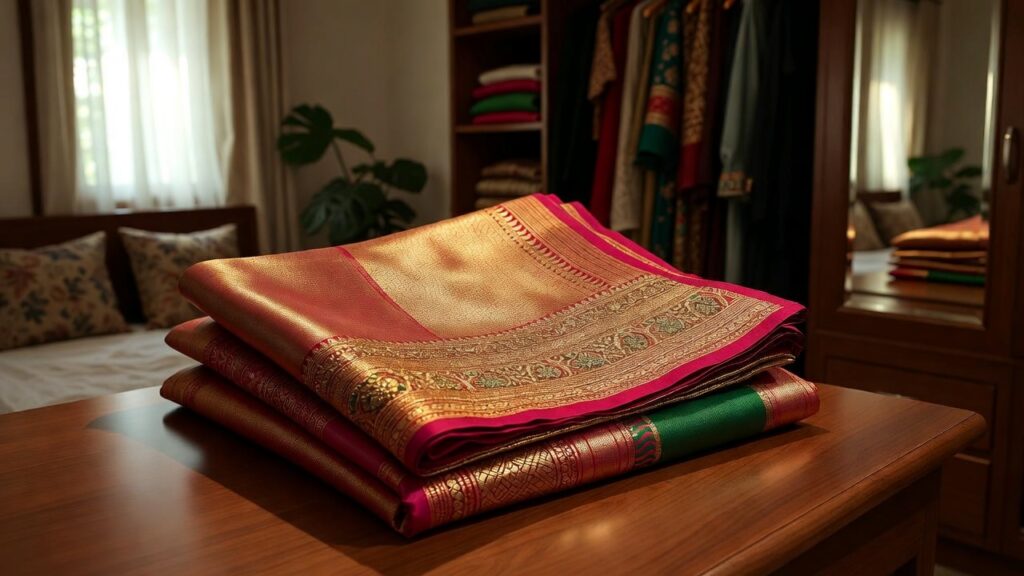
Silk sarees need to be stored in a place that is dry and allows air to pass through, especially during the monsoon. If moisture gets trapped, it can cause fungus, bad smells, or damage to the fabric. Even storing a silk saree the wrong way for a short time can leave marks or odors that are hard to remove later.
The safest way to store silk is to let it breathe while keeping it protected from dust and damp air. Always make sure the saree is completely dry before folding and storing it, whether it has been worn or cleaned.
Best storage practices:
- Store silk sarees in cotton or muslin cloth covers
- Avoid plastic or airtight wrapping
- Keep them in a dry cupboard with moisture control
- Refold sarees every few months to prevent creasing
Also see: Here’s How to Maintain Clothes Quality After Multiple Uses
Can I store silk sarees in vacuum bags safely?
Vacuum bags might look like an easy storage solution, but they are not a good choice for silk sarees in humid weather. Silk needs air to stay healthy, and vacuum bags don’t allow the fabric to breathe. If even a little moisture is left inside, it gets trapped.
In humid conditions, this trapped moisture can lead to fungus and slowly weaken the silk fabric. If the saree isn’t completely dry before sealing it, vacuum storage can do more harm than good.
Why vacuum bags are risky:
- Trapped moisture encourages mildew
- Silk fibers lose natural flexibility
- Long-term compression damages zari
- No airflow for humidity release
How to protect silk sarees from insects during humid weather?
Humidity can attract insects, and silk, especially pure silk, can be damaged if it isn’t stored properly. Insects are drawn to natural fibers, and damp conditions make the problem worse. While mothballs are often used, their strong chemicals can harm silk and leave behind an unpleasant smell.
Using natural methods is a safer choice for silk sarees. Natural insect repellents protect the fabric without damaging it or leaving harsh odors behind
Safe insect-prevention tips:
- Use neem leaves or dried lavender
- Keep cloves or bay leaves in storage
- Avoid naphthalene balls
- Clean sarees before storing to remove sweat or food residue
How to prevent fungus on silk sarees in humid conditions?
Source: Black Fungus On Clothes
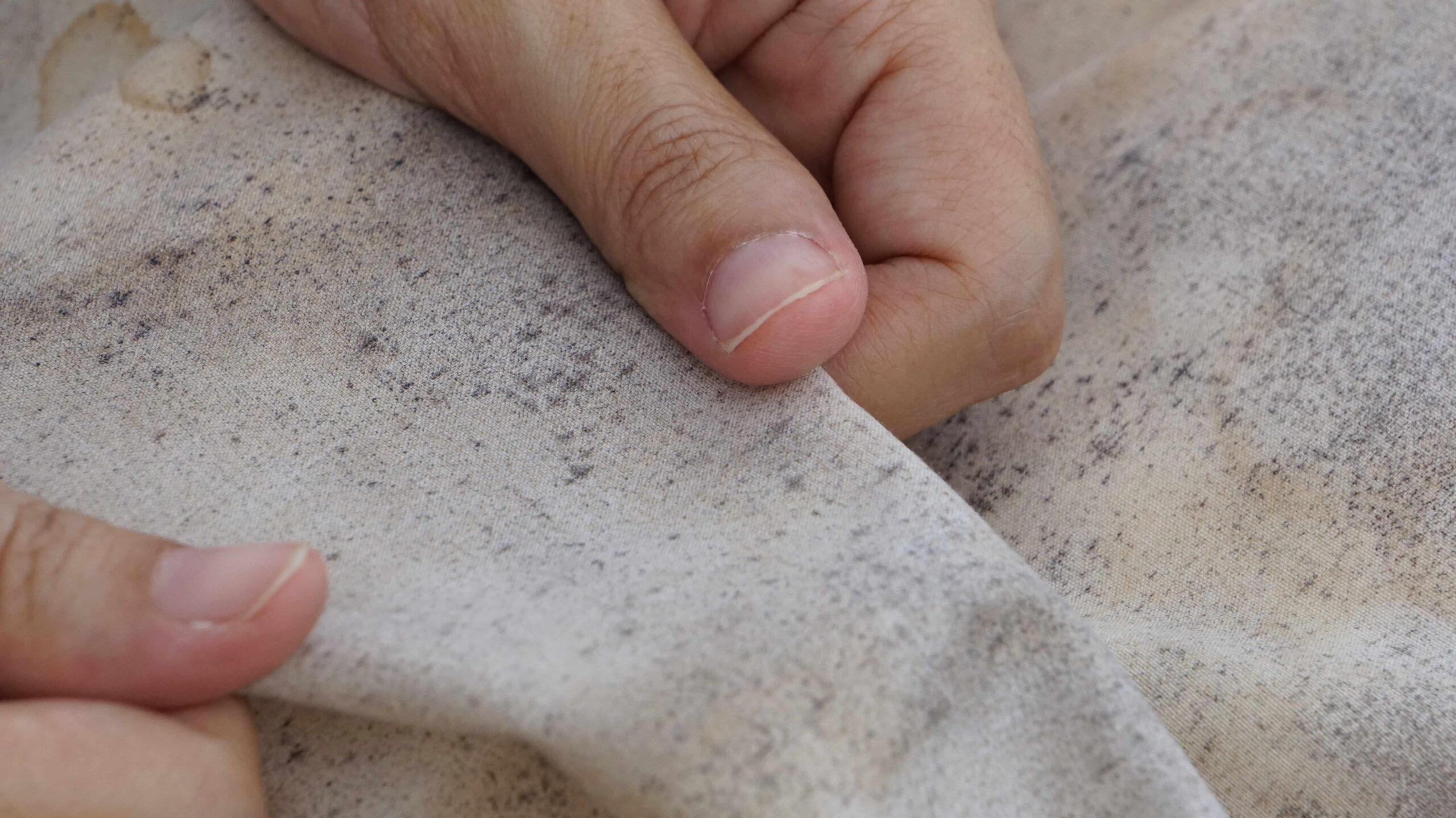
Fungus is a very common problem when silk sarees are stored during the monsoon. It often shows up as small white, green, or black spots on the fabric, and if it’s not noticed early, it can spread quickly and damage the saree.
Once fungus sets in, it can be hard to remove completely. That’s why preventing it in the first place is much easier and safer, especially for valuable silk sarees like Kanjivaram, which can be easily damaged by moisture.
Preventing moisture-related issues is a crucial part of silk saree care in humid weather, especially during monsoon months.
To prevent fungus:
- Ensure sarees are completely dry before storage
- Use silica gel or moisture absorbers
- Open cupboards occasionally for air circulation
- Avoid storing sarees near damp walls
How to control humidity for storing silk sarees at home?
Controlling humidity is very important when storing silk sarees, especially in places with heavy rain or poor air circulation. Even if a cupboard is closed, moisture can still get trapped inside and slowly damage the fabric.
Creating a dry space inside your storage area helps protect silk sarees from moisture problems. Simple steps to keep the area dry can make a big difference in keeping sarees fresh, clean, and safe over time.
Humidity control tips:
- Place silica gel packets inside cupboards
- Use charcoal or baking soda bowls (kept separate)
- Avoid wooden trunks during monsoon
- Keep sarees away from bathrooms or kitchens
How to care for Kanjivaram silk sarees during monsoon?
Kanjivaram silk sarees are heavier because they are made with thick silk threads and rich zari work, which makes them look grand but also more sensitive to moisture. When the weather is humid, these sarees can hold on to dampness for longer.
This trapped moisture can slowly reduce the natural shine of the silk and weaken the zari threads, making them look dull or fragile over time.
These sarees require extra care during the rainy season.
Special care for Kanjivaram silks:
- Wrap in soft cotton cloth, never plastic
- Refold every 2–3 months
- Avoid hanging for long periods
- Store flat to protect zari borders
How to clean silk sarees in a humid climate without damage?
If silk gets even a little wet and doesn’t dry properly, it can start to smell bad or get tiny spots on it. That’s why you shouldn’t wash silk too often. If it doesn’t look dirty, just letting it get some fresh air is usually enough.
When you do need to clean a silk saree, be very gentle. Use cold water, don’t soak it for long, and let it dry slowly in a shady place where air can move around. Never put it away until it is completely dry. If the saree is very special or very dirty, it’s best to let experts clean it so it stays safe and beautiful.
Safe cleaning approach:
- Avoid washing during extremely humid days
- Air dry in shade with good airflow
- Never wring or twist silk
- Use professional cleaning for heavy or old sarees
Can I wash my silk sarees at home in humid weather?
While some silk sarees can be washed at home, humid weather increases the risk of improper drying.
Even a small amount of moisture left in the fabric can cause problems for silk. It can lead to bad odors, fungus, or weaken the fibers over time, especially in humid weather.
If washing at home:
- Use cold water and mild detergent
- Wash quickly, don’t soak
- Dry flat in shade with ventilation
- Iron only when fully dry
How to avoid the weird smell in silk sarees during the rainy season?
Musty smells usually appear when moisture gets trapped in silk sarees and there isn’t enough air circulation. Humid weather, closed cupboards, or storing sarees slightly damp can all cause this problem. Since silk absorbs smells easily, the odor can settle deep into the fabric.
Once a silk saree picks up a musty smell, it’s very hard to remove with home methods alone
To avoid musty smells:
- Never store sarees damp
- Air them every few months
- Use natural fragrance sachets
- Avoid storing with worn clothes
How to preserve silk sarees for long-term in humid regions like Delhi NCR?
Cities like Delhi NCR and Gurgaon experience changing humidity levels throughout the year, which can be tough on silk sarees. Some months are extremely humid, while others are dry, and this constant shift puts stress on delicate silk fibers.
If sarees are only cared for during the monsoon and ignored the rest of the year, moisture damage, odors, or fabric weakness can slowly build up.
Long-term silk saree care in humid weather requires year-round attention, not just seasonal storage.
Long-term preservation tips:
- Rotate sarees regularly
- Get professional cleaning like WASH4YOU before long storage
- Avoid stacking too tightly
- Inspect sarees during every season change
Following consistent silk saree care in humid weather helps protect valuable sarees from getting damaged, caused by moisture and climate changes.
Conclusion : How to Clean and Store Silk Sarees in Humid Weather
Silk sarees are not just garments, they are heirlooms, memories, and investments. Proper silk saree care in humid weather helps protect them from fungus, insects, odor, and moisture damage, especially during monsoon months in India. With the right storage habits, humidity control, and cleaning methods, your silk sarees can remain beautiful for decades.
For delicate, valuable, or heavily worn silk sarees, professional care adds an extra layer of protection. A trusted service like Wash4You ensures eco-friendly cleaning and expert handling, ideal for preserving silk sarees safely in humid climates.