
- Introduction
- What Makes Stain Removers “Harsh” on Fabrics?
- Are Stain Removers Harsh on Different Types of Fabrics?
- Signs That Stain Remover Is Damaging Your Clothes
- Best Gentle Stain Remover for Clothes in India
- Is Stain Remover Safe for Silk and Cotton in India?
- Do Stain Removers Ruin Fabric Over Time?
- Harsh Detergent vs Gentle Stain Removal: Which Works Better?
- How to Remove Tough Stains Without Harsh Chemicals
- When to Choose Professional Cleaning Like Instead
- Common Mistakes That Damage Clothes During Stain Removal
- FAQs
- Key Takeaways
Introduction
You spill curry on your favorite shirt. You grab that bottle of powerful stain remover that promises to remove any stain. But wait – are stain removing detergents harsh on clothes?
It’s a real worry. These products say they’ll tackle tough stains, but what about your expensive silk kurta or that delicate cotton saree? Will the stain remover damage the fabric while removing the stain?
Here’s the truth: Yes, many stain removing detergents ARE harsh on clothes, especially delicate fabrics. But some are gentler than others. This guide will help you understand which products can damage your clothes, which are safe, and how to remove stains without ruining your wardrobe.
What Makes Stain Removers “Harsh” on Fabrics?
Before we talk about products, let’s understand what “harsh” means when it comes to stain removers.
Chemicals that make stain removers aggressive:
- Bleach: Removes stains fast but also weakens fabric and fades colors
- Strong enzymes: Great for breaking down food stains but can damage silk and wool
- Optical brighteners: Make clothes look whiter but leave chemical coating on fibers
- High alkaline compounds: Very effective cleaners but can fade colors and damage delicate fabrics
- Too many surfactants: Strip away natural oils from fabric, making it rough
How these chemicals damage your clothes:
When you use harsh stain removers, they don’t just attack the stain – they attack the fabric too. Colors fade. Fabric becomes thin and weak. Over time, you’ll see holes, tears, or that old worn-out look.
Think of it like using strong floor cleaner on your hands. It’ll clean them, but it’ll also damage your skin. Same thing happens with harsh stain removers on delicate clothes.
Real example: Priya used Vanish powder on her cotton kurtis every week to remove food stains. After 6 months, she noticed the areas where she applied stain remover were thinner and lighter than the rest of the fabric. The chemicals were literally eating away at her clothes. Eventually, those spots tore.
Are Stain Removers Harsh on Different Types of Fabrics?

Not all fabrics react the same way. What’s okay for polyester might destroy silk.
Delicate Fabrics (Silk, Wool, Cashmere)
These are the most sensitive. Is stain remover safe for delicate clothes like silk and wool? Usually, no.
Why silk and wool get damaged easily:
- Bleach dissolves these protein fibers instantly, creating holes
- Enzymes digest the fiber structure (yes, literally eat it)
- High pH chemicals cause yellowing and make fabric brittle
- Even “mild” stain removers can cause permanent damage
What happened to Neha: She used regular Vanish on a turmeric stain on her silk dupatta. Within minutes, the area turned yellow and felt rough. The harsh chemicals had permanently damaged the silk. Her ₹2,000 dupatta was ruined trying to save it with a ₹50 stain remover.
Safer options for delicate fabrics:
- Mild soap and cold water
- Baby shampoo diluted in water
- Professional dry cleaning for expensive pieces
Cotton and Linen
Cotton is tougher but still suffers from harsh treatment.
How cotton reacts to harsh stain removers:
- Can handle mild bleach but colors will fade
- Repeated harsh treatment makes fabric thin over time
- White cotton turns gray or yellow from chemical buildup
- Fabric feels rough instead of soft
Synthetic Fabrics (Polyester, Nylon, Rayon)
Synthetics can handle more but aren’t damage-proof.
What happens:
- Colors fade from strong chemicals
- Fabric loses smoothness, becomes rough
- May develop a dull, worn look
- More resistant than natural fabrics but still affected
| Fabric Type | How Harsh Can You Go? | Safest Stain Removal |
| Silk | Very delicate – avoid harsh removers | Mild soap, professional cleaning |
| Wool/Cashmere | Very delicate – protein damage | Wool-safe detergent only |
| Cotton (colored) | Moderate – colors fade easily | Gentle removers, no bleach |
| Cotton (white) | Can handle more | Diluted bleach sparingly |
| Polyester | More resistant | Color-safe removers okay |
| Linen | Moderate – similar to cotton | Gentle treatment |
Signs That Stain Remover Is Damaging Your Clothes
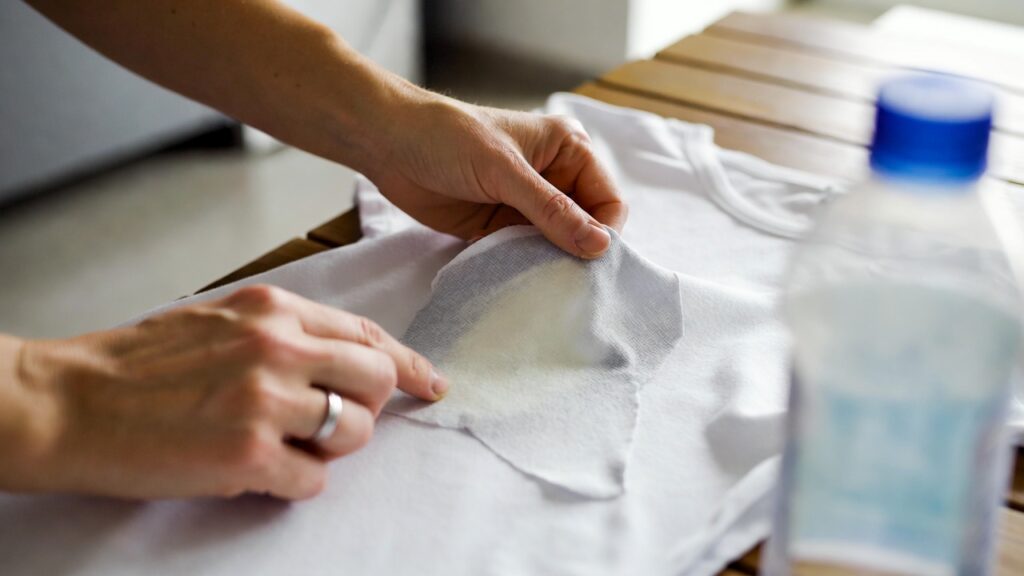
How do you know if stain removing detergent damages clothes? Look for these warning signs.
Immediate red flags after using stain remover:
- Fabric feels rough or stiff
- Colors look faded or lighter
- Fabric turns yellowish (especially whites)
- Strong chemical smell that won’t wash out
- Fabric feels thinner where you applied the remover
Long-term damage you’ll notice:
- Small holes appearing where you often treat stains
- Fabric wearing out faster than it should
- Colors bleeding in clothes that never bled before
- More pilling or fuzzing
- Clothes lose softness
Smart test before using any stain remover:
Always test on a hidden part first – inside seam, under collar, or hem. Apply small amount, wait 5 minutes, rinse, and check for damage.
Warning sign on the bottle:
If the stain remover says “wear gloves” or “avoid skin contact” – it’s probably too harsh for delicate clothes too. What burns your hands will damage delicate fabrics.
Best Gentle Stain Remover for Clothes in India
Good news – there ARE gentler options. Here’s what actually works without destroying your clothes.
Gentle Stain Removers Available in India
Ezee Liquid Detergent:
- Mild formula designed for delicates
- No harsh bleach
- Safe for most colored fabrics
- ₹150-₹250 for 500ml
- Good for light to medium stains
Genteel Liquid Wash:
- Very gentle on fabrics
- Works well on silk and wool
- No harsh chemicals
- ₹180-₹300
- Best for expensive clothes
Woolite:
- Specifically made for delicates
- No enzymes that damage protein fibers
- Safe for wool, silk, cashmere
- ₹250-₹400
- Available on Amazon
Baby Shampoo (DIY Option):
- Very mild
- Safe for all fabrics
- Mix with cold water for spot cleaning
- ₹100-₹200
- Works surprisingly well!
Eco-Friendly Stain Remover Options
Satopradhan Natural Stain Remover:
- Plant-based ingredients
- No harsh chemicals
- Safe for environment and fabrics
- ₹300-₹450
- Available online
The Better Home Stain Remover:
- Non-toxic formula
- Biodegradable
- Safe for delicate fabrics
- ₹250-₹350
DIY Natural Stain Removers:
- Baking soda paste (for fresh stains)
- White vinegar diluted (for odors)
- Lemon juice (for yellowing – use carefully)
- Salt (for fresh wine stains)
| Product | Gentleness Level | Best For | Price |
| Ezee Liquid | Gentle | Colored cotton, synthetics | ₹150-₹250 |
| Genteel | Very gentle | Silk, delicates | ₹180-₹300 |
| Woolite | Very gentle | Wool, cashmere, silk | ₹250-₹400 |
| Baby shampoo | Very gentle | All delicate fabrics | ₹100-₹200 |
| Vanish/Henko | Harsh | Only sturdy fabrics | ₹50-₹150 |
Success story: Anjali switched from Vanish to Ezee for her designer kurtas. After one year, her clothes still look new with no fading or thinning. Her friend who continued using harsh removers had to replace several pieces. The gentle option saved her money in the long run.
Is Stain Remover Safe for Silk and Cotton in India?
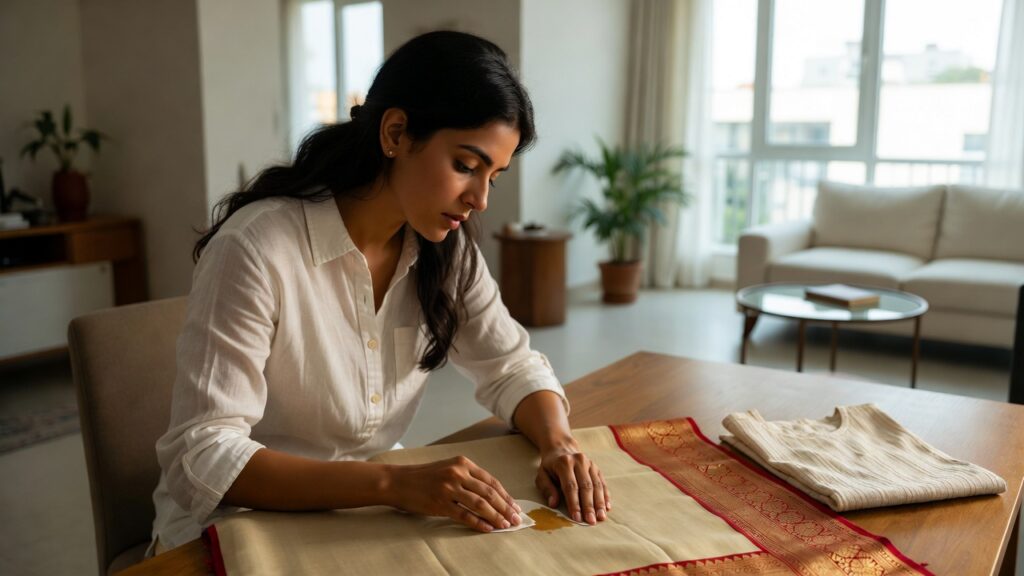
This is a common question – can you safely use stain removers on your silk sarees and cotton kurtas?
Stain Removal for Silk
Short answer: Most commercial stain removers are NOT safe for silk.
Why silk is so delicate:
- It’s a protein fiber that reacts badly to alkaline chemicals
- Bleach dissolves silk fibers
- Enzymes digest silk (literally eat it)
- Even gentle rubbing can damage the weave
Safe ways to remove stains from silk:
- Immediate blotting (never rub) with clean white cloth
- Cold water and tiny bit of baby shampoo
- Gentle dabbing on the stain
- Professional dry cleaning for expensive pieces or tough stains
What NOT to use on silk:
- Vanish or Henko (too harsh)
- Any product with bleach
- Hot water (damages silk)
- Rubbing or scrubbing
Stain Removal for Cotton
Cotton is more forgiving but still needs care.
For colored cotton:
- Use gentle stain removers like Ezee
- Avoid bleach (fades colors)
- Cold or lukewarm water only
- Test on hidden area first
For white cotton:
- Can handle diluted bleach occasionally
- Genteel or Woolite preferred for regular use
- Avoid overuse of harsh removers
Mild stain remover for expensive cotton clothes:
If your cotton piece is expensive or special, treat it like delicate fabric. Use Genteel, baby shampoo, or professional cleaning rather than harsh removers.
Real example: Priya’s white cotton bedsheets got turmeric stains. Instead of harsh stain remover, she used baking soda paste and left it for 30 minutes, then washed with regular detergent. Stains came out without any fabric damage. Her neighbor used Henko on similar stains – it worked but the fabric became thin and rough.
Do Stain Removers Ruin Fabric Over Time?
Even if harsh stain removers don’t damage your clothes immediately, what happens with repeated use?
The long-term damage from regular harsh stain remover use:
- Fiber breakdown: Each harsh wash weakens the fabric structure a little more
- Color fading: Cumulative effect makes colors progressively duller
- Fabric thinning: The fabric literally gets thinner with each harsh treatment
- Loss of elasticity: Fabric loses its stretch and shape
- Chemical buildup: Residues accumulate, making fabric stiff
It’s like this: One harsh wash might not ruin your shirt. But 10 harsh washes? 20? The damage adds up. Your shirt that should last 3-4 years barely makes it through 1 year.
Comparison study:
Two identical white cotton shirts:
- Shirt A: Washed with Vanish stain remover every week for 6 months
- Shirt B: Washed with Ezee gentle detergent for same period
Results after 6 months:
- Shirt A: Noticeably thinner, slight yellowing, rough texture, small tears appearing
- Shirt B: Still soft, white, strong fabric, no damage
The cost of harsh vs gentle stain removal:
Harsh stain remover: ₹80 per bottle, lasts 2 months = ₹40/month But you replace clothes twice as fast = ₹5,000+ per year in replacements
Gentle stain remover: ₹200 per bottle, lasts 2 months = ₹100/month Clothes last normal lifespan = save ₹3,000+ per year
The math is clear. Gentle cleaning is cheaper long-term.
Harsh Detergent vs Gentle Stain Removal: Which Works Better?

You might think: “But do gentle removers actually work? Or do I need harsh chemicals for tough stains?”
The truth: Gentle methods work – they just take slightly longer.
How Harsh Removers Work
- Attack everything – stain AND fabric
- Work very fast (5-10 minutes)
- Often require just one application
- Damage accumulates over time
How Gentle Removers Work
- Target the stain more specifically
- Take a bit longer (15-30 minutes)
- May need reapplication for tough stains
- Protect your fabric long-term
Real comparison test:
Curry stain on cotton fabric:
- Vanish: Removed in 10 minutes, but fabric faded slightly
- Ezee + soaking: Removed in 25 minutes, fabric undamaged
The smart approach:
- For fresh stains: Gentle methods work perfectly
- For old, set stains: Pre-treat with gentle remover, soak longer
- For really stubborn stains on delicate fabric: Professional cleaning
When harsh might be okay:
- Sturdy polyester work clothes
- White cotton towels (not delicate)
- Clothes you don’t care much about
When gentle is essential:
- Any silk, wool, or cashmere
- Expensive clothes
- Colored fabrics
- Clothes you want to last long
How to Remove Tough Stains Without Harsh Chemicals
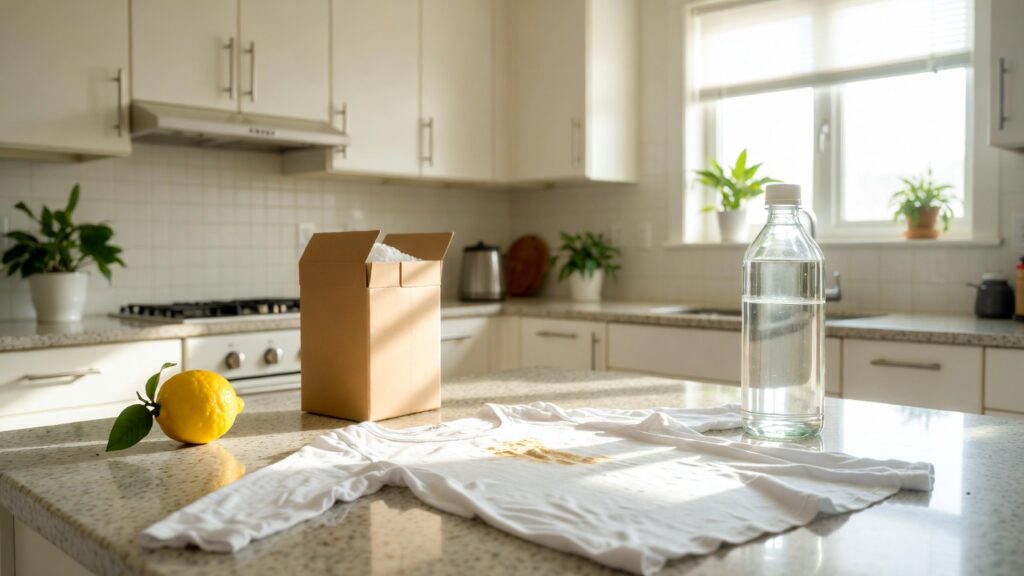
You can tackle even stubborn stains gently. Here’s how.
For Oil/Grease Stains
Gentle method:
- Sprinkle baking soda or cornstarch on fresh stain
- Let it absorb for 15 minutes
- Brush off gently
- Apply small amount of baby shampoo
- Soak in cold water for 30 minutes
- Wash normally with gentle detergent
For Curry/Turmeric Stains
Gentle method:
- Don’t let it dry (treat immediately if possible)
- Mix baking soda with a little water to make paste
- Apply on stain, let sit 20 minutes
- Rinse with cold water
- If stain remains, use diluted lemon juice (test first!)
- Wash with gentle detergent
For Wine/Juice Stains
Gentle method:
- Blot immediately (never rub)
- Sprinkle salt on wet stain (absorbs liquid)
- Soak in cold water for 30 minutes
- Apply gentle detergent directly on stain
- Soak another 30 minutes
- Wash normally
For Ink Stains
Gentle method:
- Place paper towel under stain
- Dab with rubbing alcohol using cotton ball
- Blot frequently
- Once most ink is lifted, wash with gentle detergent
- For delicate fabrics, take to professional cleaner
Important tips for all stain removal:
- Always test on hidden area first
- Use cold water (hot sets stains)
- Blot, never rub
- Be patient – gentle methods take time
- For expensive clothes, don’t experiment – get professional help
Success story: Meera spilled red wine on her white silk kurta at a wedding. She immediately sprinkled salt on it, then took it to professional cleaner next day. They removed it completely using gentle, non-toxic methods. Her friend tried removing similar stain at home with Vanish – the stain came out but the silk was damaged permanently.
When to Choose Professional Cleaning Like Wash4You Instead
Sometimes, it’s just safer to let professionals handle it.
Get professional cleaning when:
- Stain is on expensive silk, wool, or designer clothes
- You’ve already tried gentle home methods and stain won’t budge
- The garment says “dry clean only”
- Stain is oil-based on delicate fabric
- You’re not confident about removing it yourself
What professionals do differently:
Premium services like Wash4You use controlled, non-toxic cleaning systems designed to remove stains without fabric damage. They have:
- Specialized solvents that target stains
- Temperature-controlled processes
- Experience with different fabric types
- Professional-grade gentle stain removers
Cost vs. risk:
Professional stain removal: ₹300-₹800 per garment Replacing ruined ₹5,000 silk kurta: ₹5,000
The math is simple.
Common Mistakes That Damage Clothes During Stain Removal

Don’t make these mistakes that ruin clothes.
Mistake 1: Rubbing the stain hard
- Pushes stain deeper into fabric
- Damages fabric weave
- Always blot, never rub
Mistake 2: Using hot water on stains
- Sets protein stains permanently
- Causes colors to bleed
- Always use cold water first
Mistake 3: Putting too much stain remover
- More product doesn’t mean better cleaning
- Causes chemical buildup
- Harder to rinse out completely
- Use recommended amount only
Mistake 4: Not testing first
- Leads to permanent damage
- Different fabrics react differently
- Always test on hidden area
Mistake 5: Letting stain dry before treating
- Dried stains are 10x harder to remove
- May become permanent
- Treat stains immediately when possible
Mistake 6: Mixing different products
- Chemical reactions can damage fabric
- Can create harmful fumes
- Use one product at a time
Costly example: Rahul had curry stain on his shirt. He applied Vanish, then added bleach thinking more chemicals = better cleaning. The chemicals reacted, damaged the fabric, and faded the color permanently. One stain became one ruined shirt.
Frequently Asked Questions
Q: Are stain removing detergents harsh on clothes? Yes, many commercial stain removers contain harsh chemicals like bleach, strong enzymes, and alkaline compounds that can damage delicate fabrics, fade colors, and weaken fibers over time. Silk, wool, and colored cotton are especially vulnerable. Gentle alternatives like Ezee, Genteel, or baby shampoo are safer options.
Q: Which stain remover is safe for silk clothes in India? Most commercial stain removers are too harsh for silk. Instead, use mild soap or baby shampoo with cold water. For expensive silk pieces, professional dry cleaning is safest. Avoid Vanish, Henko, or any product containing bleach or strong enzymes as they can dissolve silk fibers.
Q: Do stain removers ruin fabric permanently? Harsh stain removers can cause permanent damage including color fading, fiber thinning, yellowing, and holes. The damage accumulates with repeated use. Delicate fabrics like silk and wool are most at risk. Using gentle, pH-neutral removers prevents permanent damage while still cleaning effectively.
Q: What is the best gentle stain remover for expensive clothes? Genteel Liquid Wash (₹180-₹300) and Woolite (₹250-₹400) are excellent gentle options available in India. For natural alternatives, diluted baby shampoo or baking soda paste work well on most stains without damaging expensive fabrics. Always test on hidden areas first.
Q: Can I use Vanish on cotton clothes safely? Vanish can be used on sturdy white cotton occasionally but will fade colored cotton over time. For colored cotton or expensive cotton garments, gentler options like Ezee are better. Always dilute as per instructions and avoid frequent use to prevent fabric thinning.
Q: How do you remove curry stains without harsh chemicals? Make a paste of baking soda and water, apply to curry stain, and let sit 20 minutes. Rinse with cold water. If needed, add diluted lemon juice (test first). Soak in cold water with gentle detergent for 30 minutes, then wash normally. This removes most curry stains without fabric damage.
Q: Are eco-friendly stain removers as effective as harsh ones? Yes, eco-friendly stain removers work well but may take slightly longer. Products like Satopradhan or The Better Home use plant-based ingredients that remove stains without harsh chemicals. They’re especially good for protecting delicate fabrics and are safer for skin and environment.
Q: Why do stain removers make clothes feel stiff? Harsh stain removers leave chemical residue that builds up in fabric fibers, causing stiffness. Strong alkaline compounds and optical brighteners coat fibers rather than fully rinsing out. Using gentle removers and adding an extra rinse cycle prevents this stiffness.
Q: Can professional cleaning remove stains without damaging clothes? Yes, professional cleaners use controlled, non-toxic methods specifically designed to remove stains while protecting fabric. They assess fabric type, use appropriate solvents, and have equipment that home methods can’t match. For expensive or delicate items, professional cleaning is safest.
Q: How can I tell if a stain remover is too harsh? Check for warning labels like “wear gloves” or “avoid skin contact.” Test on hidden fabric area – if it causes color fading, roughness, or yellowing, it’s too harsh. Ingredients like sodium hypochlorite (bleach), high pH compounds, or strong enzyme concentrations indicate harsh formulas.
Key Takeaways: Protect Your Clothes from Harsh Stain Removers
Your action plan for safe stain removal:
Immediate steps you can take:
- Check what you’re currently using – if it’s Vanish, Henko, or contains bleach, consider switching to gentler options
- Buy gentle alternatives – Ezee (₹150-₹250) or Genteel (₹180-₹300) for regular use
- Stock baking soda and baby shampoo – natural, gentle options for emergency stain removal
- Always test first – hidden seam or hem before applying to visible area
For different fabric types:
- Silk, wool, cashmere: Only mild soap or professional cleaning
- Colored cotton: Gentle removers only, never bleach
- White cotton: Diluted bleach okay occasionally, gentle preferred
- Synthetics: More resistant but still use gentle for longevity
Smart stain removal habits:
- Treat stains immediately when possible
- Use cold water first, always
- Blot, never rub
- Be patient with gentle methods
- Know when to call professionals
The money truth:
Spending ₹200 on gentle stain remover instead of ₹80 on harsh one saves you ₹3,000+ per year in clothing replacements. Your clothes last longer, look better, and stay softer.
Remember:
Are stain removing detergents harsh on clothes? Yes, many are – but you now know which ones to avoid and which gentle alternatives actually work. Your clothes will thank you with years of extra life.
Start today. Check your current stain remover. If it’s harsh, make the switch. Your wardrobe is worth protecting.