- Introduction
- Why Do Sweat and Deodorant Stains Damage Clothes Over Time?
- What Causes Sweat and Deodorant Stains on Clothes?
- How Can You Remove Sweat Marks Without Damaging Fabric?
- What Are the Best Natural Ways to Remove Sweat Stains?
- How Can You Prevent Deodorant Stains on Clothes?
- Does Baking Soda Remove Deodorant Stains?
- How Does Vinegar Work for Sweat Stains?
- How Do You Get Rid of Sweat Stains Without Fading Color?
- What Is the Best Way to Remove Yellow Sweat Stains?
- How Can You Remove White Deodorant Marks?
- Conclusion
Introduction
Sweat marks and deodorant stains are one of the most common clothing care concerns, especially for everyday wear. When treated incorrectly, harsh scrubbing, hot water, or chemical-heavy cleaners can weaken fibers, fade colors, and shorten garment life. Knowing how to remove sweat marks from clothes without damaging fabric helps preserve quality, appearance, and comfort. This guide shares fabric-safe solutions, natural remedies, and practical care tips that work well for daily clothing and long-term maintenance.
Why Do Sweat and Deodorant Stains Damage Clothes Over Time?
Sweat itself is mostly water, but when it mixes with deodorant, it creates residue that sticks to fabric fibers. Over time, this buildup hardens, causing discoloration, stiffness, and trapped odors. Repeated washing or drying with heat can make these stains settle deeper into the fabric, making removal more difficult.
What Causes Sweat and Deodorant Stains on Clothes?
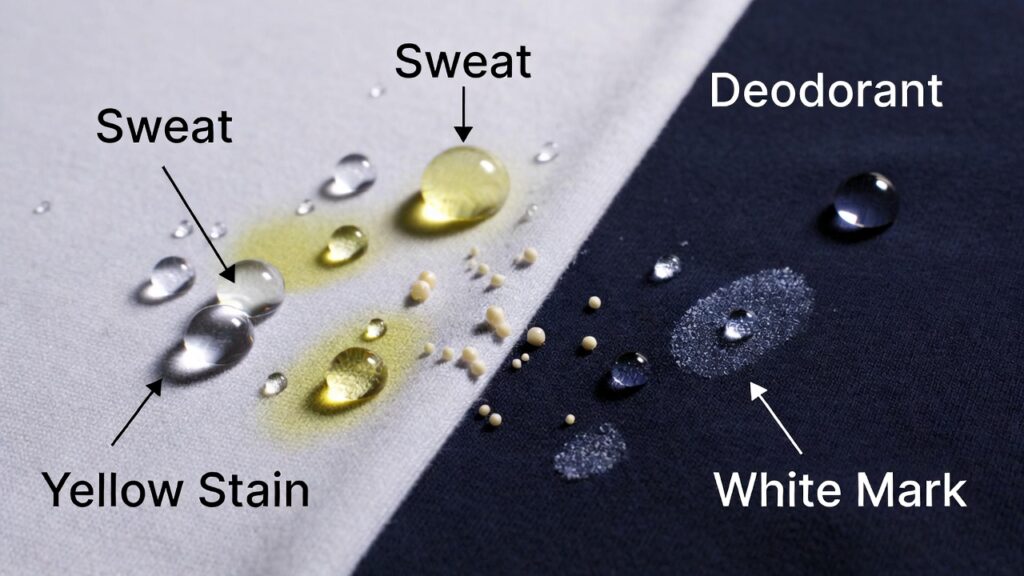
Sweat and deodorant stains often show up when sweat reacts with deodorant ingredients, especially around the underarm area. As residue builds up, it leads to yellow stains on light fabrics and white marks on darker clothing.
Common causes include:
- Aluminum-based deodorants
- Salt and protein from sweat
- Delayed washing after wear
- Using hot water before stain treatment
These factors make it harder to remove deodorant stains from clothes, particularly in areas that experience frequent friction.
How Can You Remove Sweat Marks Without Damaging Fabric?
Removing sweat marks safely requires a gentle, fabric-first approach. The right method helps lift stains while preserving softness and color.
Follow these care-friendly steps:
- Treat stains as soon as possible
- Use cold or lukewarm water only
- Dab or gently rub and avoid aggressive scrubbing
- Air-dry and inspect before applying heat
These steps help remove sweat marks from clothes without damaging fabric, making them suitable for regular clothing care.
What Are the Best Natural Ways to Remove Sweat Stains?
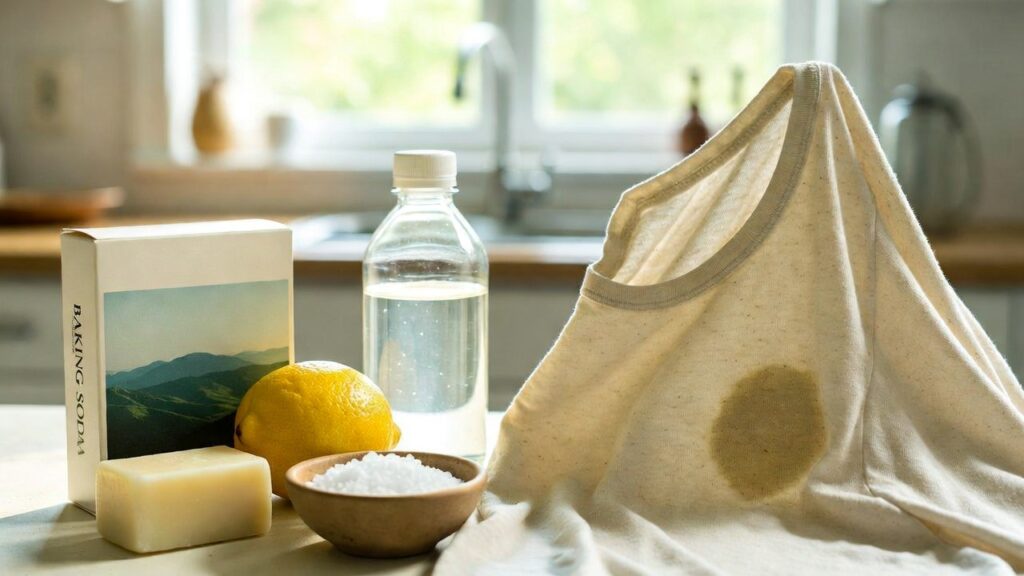
Natural ways to remove sweat stains are effective, affordable, and suitable for routine garment care. They work well on everyday clothing and are especially helpful for maintaining fabric quality over time. Most of these solutions are easy to use and readily available at home.
Popular natural options include:
- Baking soda – absorbs odor and lifts residue
- White vinegar – breaks down sweat and deodorant buildup
- Lemon juice – helps brighten white fabrics
When used correctly, these methods support sweat stain removal for delicate fabrics without weakening fibers.
How Can You Prevent Deodorant Stains on Clothes?
Prevention plays a key role in keeping clothes stain-free and long-lasting.
To prevent deodorant stains on clothes:
- Allow deodorant to dry fully before dressing
- Apply lighter layers
- Choose aluminum-free or stain-resistant formulas
- Wash garments promptly after wear
These habits reduce buildup and help maintain fabric quality.
Does Baking Soda Remove Deodorant Stains?
Yes, baking soda is a gentle yet effective option for deodorant residue. It helps remove deodorant stains from clothes while remaining safe for most fabrics.
Why baking soda works:
- Absorbs moisture and odor
- Breaks down residue buildup
- Does not weaken fibers
It is especially useful when aiming to remove sweat marks from clothes without damaging fabric in underarm areas.
How Does Vinegar Work for Sweat Stains?
Using vinegar for sweat stains on clothes helps dissolve mineral deposits and deodorant residue trapped in fibers.
Key benefits include:
- Loosens sweat and deodorant buildup
- Neutralizes odor-causing bacteria
- Safe for cotton and blended fabrics
Vinegar is particularly effective for removing old deodorant buildup from clothes.
How Do You Get Rid of Sweat Stains Without Fading Color?
To get rid of sweat stains on shirts without fading color, gentle treatment is essential.
Best practices include:
- Always washing with cold water
- Spot-treating only stained areas
- Avoiding bleach on colored fabrics
- Air-drying before checking results
These steps protect color while allowing effective stain removal.
What Is the Best Way to Remove Yellow Sweat Stains?
Yellow stains usually occur when sweat reacts with deodorant. A mild, targeted approach works best.
Effective method:
- Apply baking soda to lift residue
- Treat stains before washing
- Avoid heat until stains are gone
This helps remove yellow sweat stains from armpits without stressing fabric fibers.
How Can You Remove White Deodorant Marks? – Wash4You Explains
White marks on dark clothing are common but easy to manage with gentle care.
Quick solutions include:
- Gently buffing with a soft cloth
- Using a dry fabric or sock to lift residue
- Avoiding excess moisture
For stubborn marks, you can also try Wash4You’s gentle underarm stain remover, designed to lift white deodorant residue without harming fabric colors. These methods safely remove white deodorant marks from black shirts without streaking.
Conclusion
Using gentle methods and natural solutions makes it easier to remove sweat marks from clothes without damaging fabric. Ingredients like baking soda and vinegar provide fabric-safe results, while proper washing habits help prevent future stains. With consistent care, clothes remain fresh, clean, and long-lasting, without the need for harsh treatments.