- Introduction
- Why Should Clothes be Treated at Home Before Dry- Cleaning?
- How to Remove Common Stains at Home?
- Why Is the Stain Still There Even After Dry Cleaning?
- Does Repeated Dry Cleaning Damage Your Clothes?
- How to Pre-Treat Stains Before Sending Clothes to Dry Cleaning?
- How Can You Tell If a Stain Can Be Fixed at Home or Needs a Dry Cleaner?
- Is Dry Cleaning Toxic or Eco-Friendly?
- What Home Remedies Work for Tough Stains?
- Which Is Better for Fabric Quality: Washing at Home or Dry Cleaning?
- Conclusion: Better Dry Cleaning Starts at Home
Introduction
When a stained garment goes straight to the dry cleaner without any home treatment, the stain doesn’t just “wait” to be removed. Instead, it reacts.
Dry cleaning uses strong chemical solvents and controlled heat to clean clothes. If a stain, like oil, sweat, food, or makeup, has already settled into the fabric, these solvents can actually lock the stain into the fibres rather than remove it. This process is often called “setting the stain.”
That’s why learning how to pre-treat clothes at home is one of the smartest steps you can take for better results, longer fabric life, and more eco-friendly cleaning.
Why Should Clothes be Treated at Home Before Dry- Cleaning?
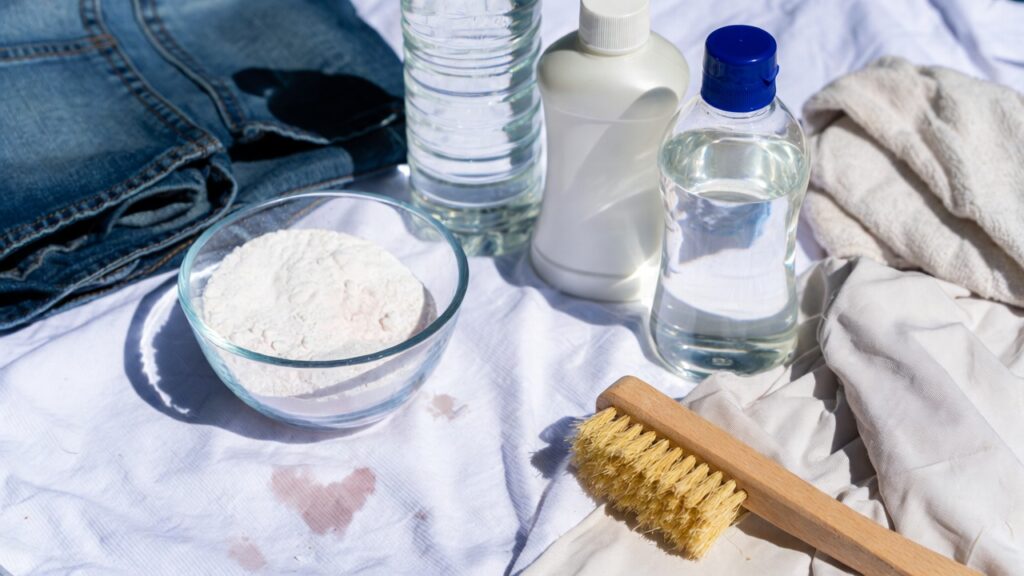
When stains are fresh, they sit mostly on the surface of the fabric. A little care at home, like blotting with cold water or using mild detergent, can loosen the stain. This makes it easier for dry-cleaning solvents to remove it completely.
Key Benefits:
- Better finish:
Stains are loosened early, so clothes come back looking cleaner, brighter, and more even in colour, without dull patches or leftover marks. - Less fabric stress:
Since stains are easier to remove, dry cleaners don’t need to use strong chemicals or repeat cycles. This keeps fibres softer, stronger, and less worn over time. - Fewer repeat cleanings:
Proper pre-treatment reduces the chances of stubborn stains remaining. That means you don’t have to send the same garment for cleaning again and again.
This is why understanding why clothes should be treated at home before dry-cleaning helps prevent stains from setting and protects fabric quality.
How to Remove Common Stains at Home?

Source: https://in.pinterest.com/pin/384776361935555939/
Knowing how to handle stains early makes a big difference because fresh stains are much easier to remove than old ones.
If stains are ignored:
- They settle deeper into the fabric
- They become harder to remove
- Dry-cleaning chemicals may lock them in permanently
So, early stain care at home isn’t complicated or time-consuming, it’s just smart preparation that leads to better dry-cleaning results and helps protect your clothes.
Easy stain-removal approaches:
- Cold water blotting – Ideal for fresh food or drink stains
- Mild liquid detergent – Works well on oil and grease spots
- Baking soda paste – Absorbs odours and moisture
- White vinegar (diluted) – Effective on sweat and deodorant stains
- Soft cloth dabbing – Prevents fibres from breaking
These steps help remove stains at home before laundry service without damaging fabric. Simple early actions clearly show why clothes should be treated at home before dry-cleaning for better stain removal and fabric safety.
Why is the stain still there even after dry cleaning?
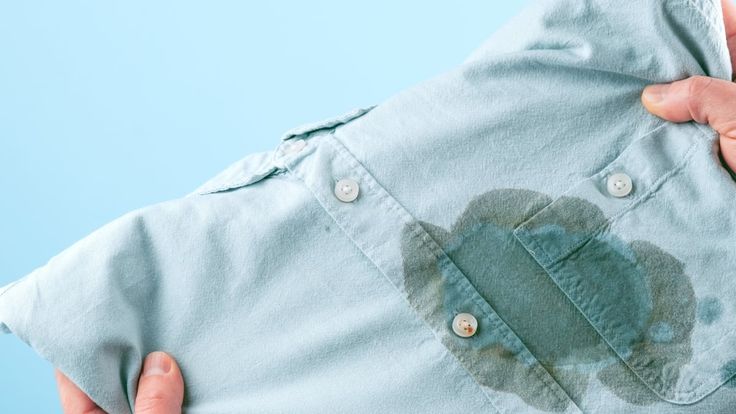
Source: https://in.pinterest.com/pin/522628731774243918/
Stains can still be there even after dry cleaning because not all stains react well to dry-cleaning chemicals, especially if they weren’t treated early.
Common reasons include:
- Heat and solvents locking untreated stains
- Old stains becoming chemically bonded
- Certain stains (sugar, protein) reacting poorly to dry cleaning
- No prior home stain removal before sending off to dry- cleaning
How it helps:
- Loosens stain particles before professional care
- Reduces chemical exposure during dry cleaning
- Preserves colour and fabric texture
- Improves eco dry cleaning outcomes
Leftover stains often highlight why clothes should be treated at home before dry-cleaning instead of relying only on professional solvents.
Does Repeated Dry Cleaning Damage Your Clothes?
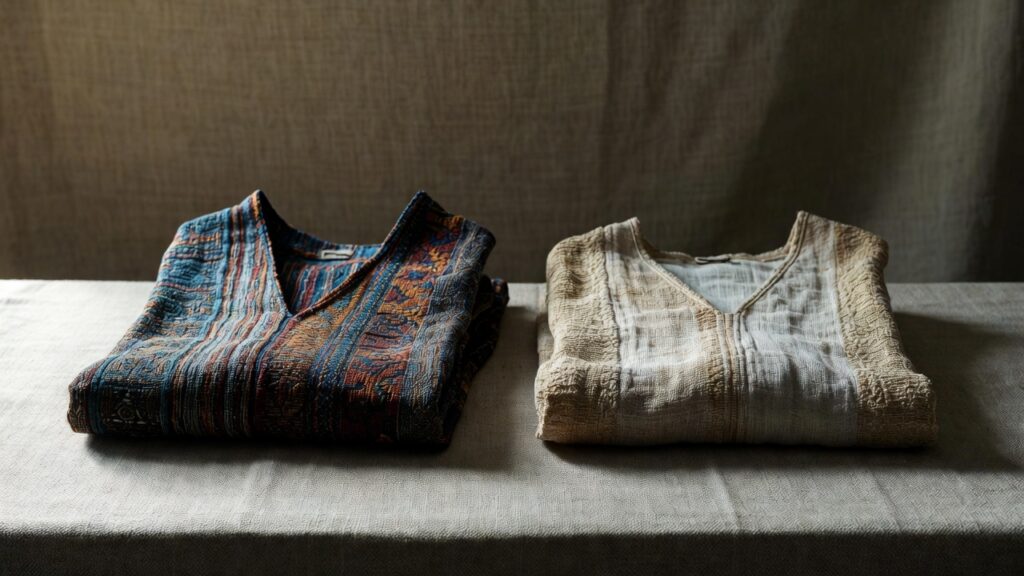
Dry cleaning does not damage clothes when done correctly. It is a gentle and effective cleaning method designed to protect delicate fabrics, maintain shape, and remove tough stains. When used only when needed, dry cleaning helps clothes stay fresh, clean, and well preserved.
Dry cleaning is a safe and effective way to clean clothes, especially delicate fabrics. When done as needed, it helps keep garments looking fresh and well cared for.
Common reasons are-
- Fabric fibres weaken
Each dry-cleaning cycle slightly breaks down the fibres. After many cleanings, clothes may feel thinner or rougher. - Colours slowly fade
The chemicals can strip colour little by little, making clothes look dull or worn. - Buttons and decorations suffer
Beads, buttons, linings, and prints can loosen or crack with repeated chemical contact. - Natural softness is lost
Fabrics like wool, silk, and linen may lose their natural texture and flexibility.
Simple habits like checking for stains, treating them early, and handling garments gently help prevent stains from settling into the fabric. When clothes arrive at the dry cleaner already prepared, the professional cleaning process becomes more effective and less harsh
How to Pre-Treat Stains Before Sending Clothes to Dry Cleaning?
Pre-treating clothes at home before dry cleaning is simple, gentle, and very effective. It doesn’t replace professional cleaning, it prepares your garments so dry cleaning works better.
Here’s how to do it step by step:
1. Check Your Clothes as Soon as You Take Them Off
The earlier you notice a stain, the easier it is to treat.
- Look closely under good light for food, sweat, oil, or makeup marks
- Fresh stains sit on the surface and haven’t soaked deep yet
- Early attention prevents stains from becoming permanent
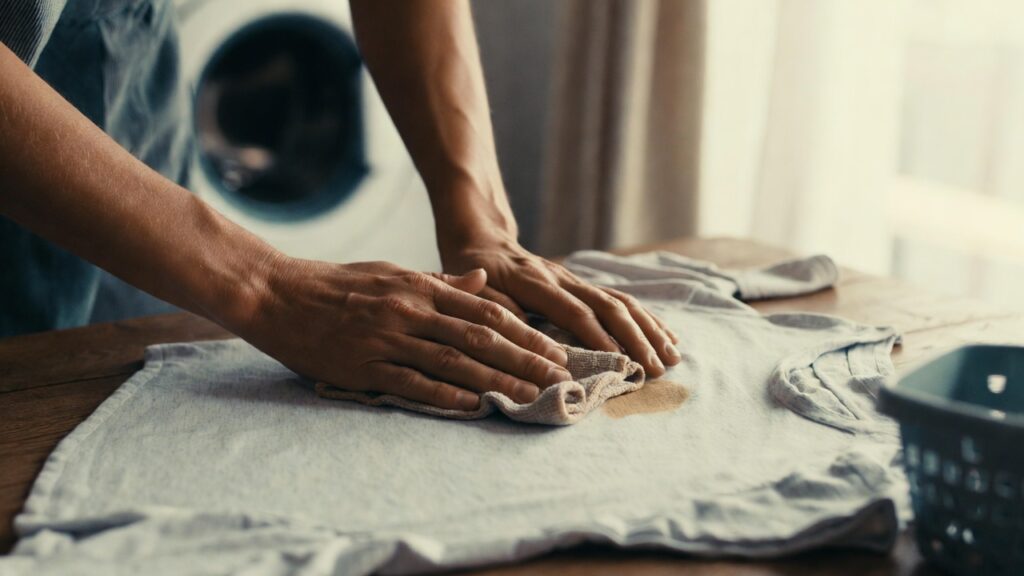
2. Blot the Stain, Don’t Rub
Rubbing can push the stain deeper into the fabric.
- Use a clean cloth or tissue
- Gently dab from the outside of the stain inward
- This helps lift the stain without damaging fibres
3. Use Cold Water for Most Fresh Stains
Cold water is safer and prevents stains from setting.
- Lightly dampen the stained area
- Especially useful for food, drink, and sweat stains
- Avoid hot water, it can “cook” the stain into the fabric
4. Apply a Mild Cleaner or Detergent
Strong chemicals aren’t needed at this stage.
- Use a small drop of mild liquid detergent or soap
- Gently work it in with your fingers or a soft cloth
- Let it sit for a few minutes, then blot again
5. Test First on Delicate Fabrics
Some fabrics need extra care.
- Always test on a hidden seam
- Fabrics like silk, wool, or linen need gentle handling
- If colour bleeds or fabric reacts, stop immediately
This helps avoid damage by pre-treating for dry cleaning correctly.
How can you tell if a stain can be fixed at home or needs a dry cleaner?
Not all stains are safe to handle at home, and knowing the difference helps protect your clothes from accidental damage. A balanced approach, treating simple stains early and leaving complex ones to professionals, gives the best results
.
Stains You Can Usually Treat Safely at Home
These stains are generally fresh, surface-level, and less aggressive, making them suitable for gentle home care.
- Fresh food or beverage stains
Spills like tea, coffee, juice, or gravy are easier to manage when they’re fresh. A quick blot with cold water prevents them from soaking deep into the fibres. - Sweat or deodorant marks
These stains often build up over time but respond well to mild detergent or diluted vinegar if treated early. Early care also helps prevent yellowing.
Stains Best Left to Professionals
Some stains are complex and require specialized solvents, techniques, or controlled treatment.
- Ink, dye transfer, or paint
These stains spread easily and can permanently damage fabric if handled incorrectly. Professional cleaners know how to isolate and lift them safely. - Antique or delicate fabrics
Materials like silk, velvet, wool, or embellished garments can react badly to home treatments. Even water can cause marks or shrinkage.
Is Dry Cleaning Toxic or Eco-Friendly?

Traditional dry cleaning is effective, but it can be harsh on both clothes and the environment. Older dry-cleaning methods rely on strong chemical solvents that don’t always break down easily. These chemicals can create waste, use large amounts of energy during processing, and in some cases contribute to water contamination if not handled responsibly.
Why it matters:
Eco-friendly dry cleaning is improving
Modern dry cleaners now use safer solvents, advanced filtration, and energy-efficient machines to reduce environmental harm.
Cleaner clothes need less chemical effort
When garments arrive with untreated stains, cleaners often need stronger chemicals and longer cycles to remove them.
Home pre-treatment reduces chemical load
Treating stains early at home loosens them, so dry cleaners can use gentler methods instead of harsh solvents.
Supports eco dry-cleaning methods
Less chemical intensity aligns better with green cleaning practices and safer solvent systems.
Services like Wash4you uses complete eco-friendly dry cleaning methods that are gentle on clothes and the environment.
What Home Remedies Work for Tough Stains?
For tougher stains, natural home remedies can be a helpful first step before sending clothes for professional cleaning. These methods are gentle on fabric and often effective when used early.
Effective home solutions:
- Baking soda + water paste
- Vinegar + mild detergent
- Lemon juice for light stains
- Cornstarch for grease absorption
These remedies work best when applied gently and allowed to sit for a short time, without rubbing or using heat. While they may not remove every stain completely, they can loosen and reduce the stain, making it easier for professional dry cleaning to finish the job.
Which Is Better for Fabric Quality: Washing at Home or Dry Cleaning?
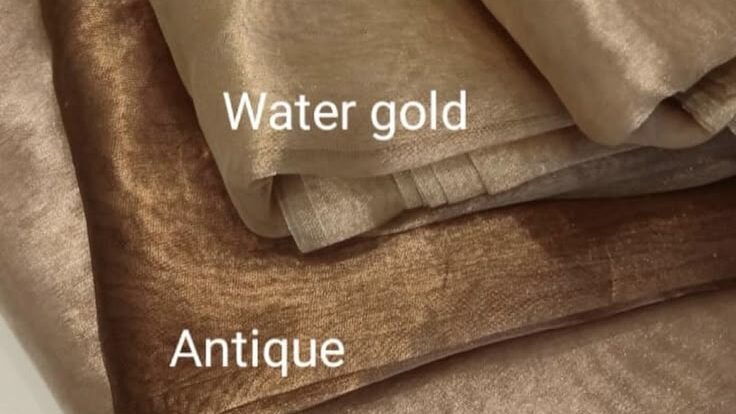
Source: https://in.pinterest.com/pin/4503668373738354/
The best approach isn’t choosing only washing at home or only dry cleaning, it’s using both in a smart, balanced way.
Washing at home is great for everyday clothes that are lightly worn or made from sturdy fabrics. It’s gentle, convenient, and helps avoid unnecessary chemical exposure. Dry cleaning, on the other hand, is better for structured garments, delicate fabrics, and special-occasion wear that need professional handling.
Washing at home is better for:
- Everyday cottons
- Lightly soiled garments
- Frequent wear items
Dry cleaning is better for:
- Structured garments
- Delicate fabrics
- Occasion wear
In simple terms, smart combination care means using the right method at the right time, instead of relying too much on just one.
Conclusion: Better Dry Cleaning Starts at Home
At Wash4You, we believe garment care is a shared responsibility. When you pre-treat clothes at home, you’re not just improving stain removal, you’re extending fabric life, reducing environmental impact, and ensuring superior dry-cleaning results.
A little effort before pickup goes a long way toward cleaner clothes, healthier fabrics, and smarter care choices.