
Gurgaon & Delhi NCR’s Most Reliable Sofa & Upholstery Cleaning
We shampoo and hot water extract fabric upholstery in your own living room, with the moisture kept low enough that the foam actually dries. Before we start, you get a straight answer on what will come out and what will not.

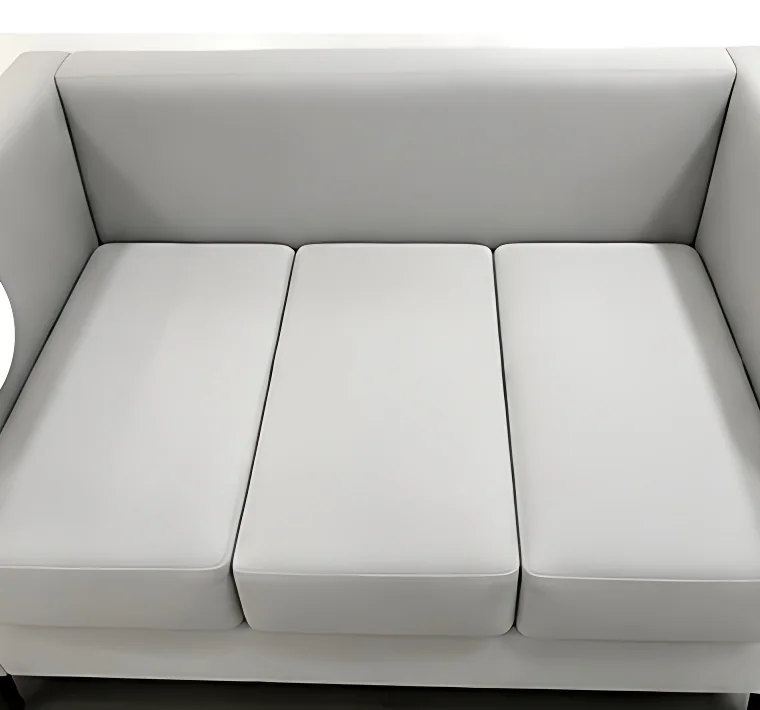 Before
After
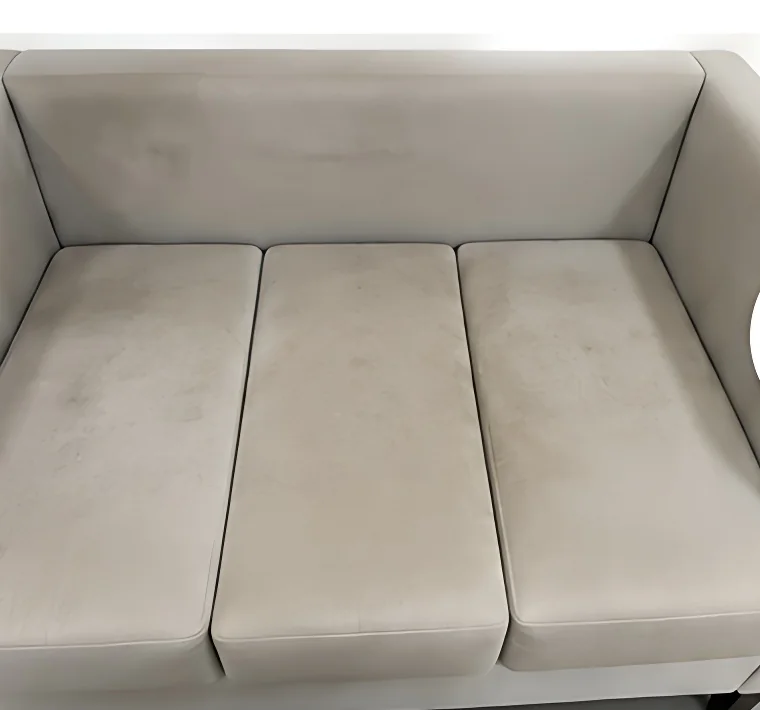
48 hours
Real results
Our own work, photographed in store
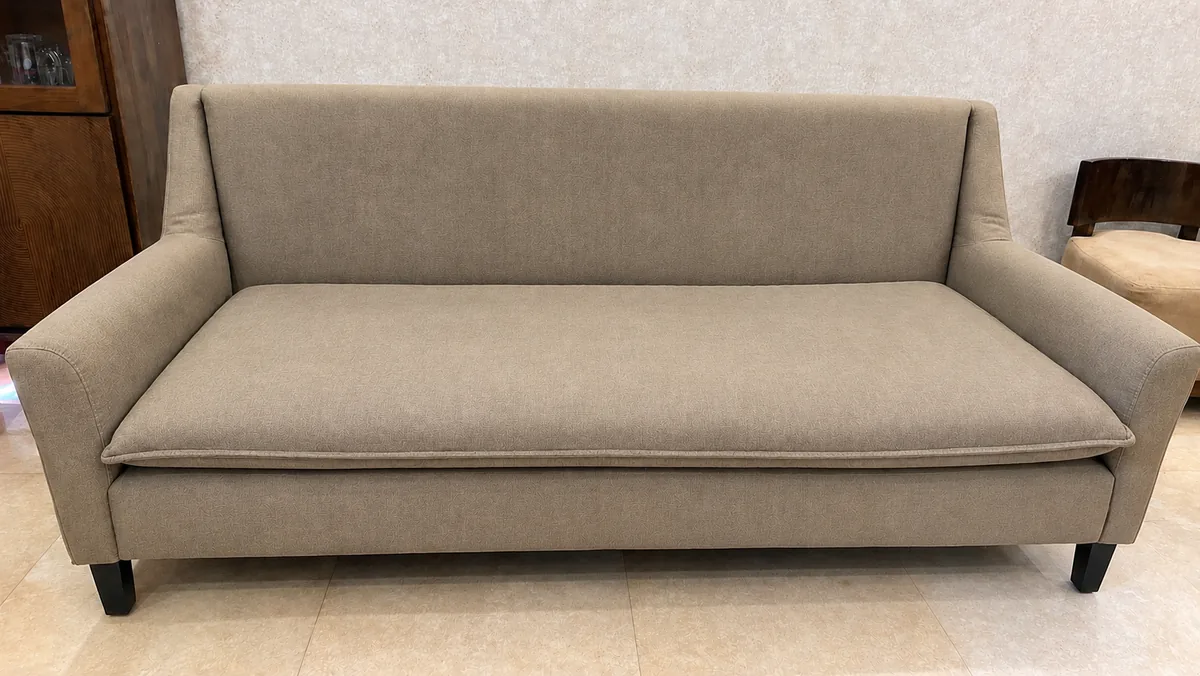 Before
After
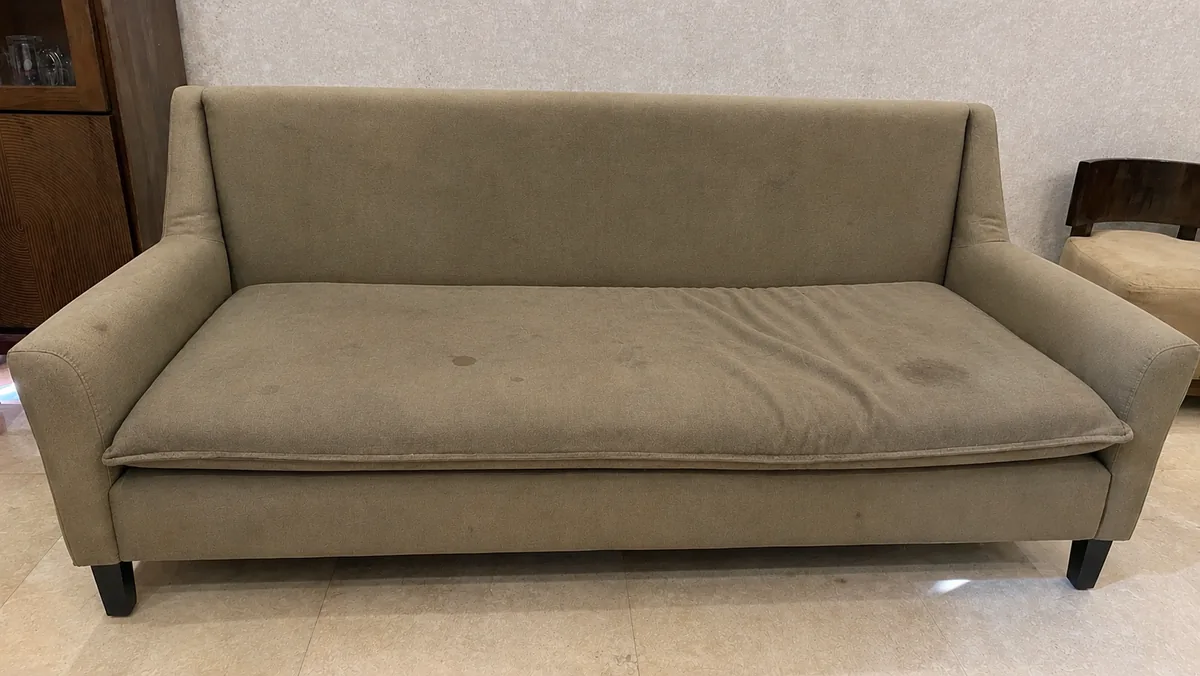
Marks and body-oil dullness lifted from the seat cushions and arms.
Why a sofa goes grey before it ever gets stained
Most sofas we are called to in Gurugram have no obvious stain on them. They have simply gone grey along the arms, the headrest line and the front edge of the seat cushions. That is hair oil, body oil and skin contact oxidising over a couple of years, holding on to the fine dust that gets in through balcony doors and lift lobbies. It builds up so gradually that families stop seeing it, then notice it the day a new cushion cover arrives and looks wrong against the sofa. The three-seater in our before-and-after photos was exactly this: no spill, no accident, just years of contact soil, cleaned in the customer's own living room.
The process, described honestly
Dry soil comes out first. We vacuum the deck, the crevices and the area under the cushions before any liquid touches the fabric. This part is not optional. Water on dry particulate soil turns it into mud at the base of the fibre and pushes it deeper, which is why a wet home cleaning often looks worse a week later.
Next we identify the fabric and test it. A hidden patch, usually the back panel or the underside of a cushion, gets a colour-fastness test before anything else happens. Dark blues, reds and handloom weaves bleed more often than people expect, and a bleeding dye discovered on the back panel is a very different conversation from one discovered on the seat.
The clean itself is a pre-spray, a dwell time, gentle agitation with a soft brush so the solution travels through the pile instead of sitting on top of it, then hot water extraction with an upholstery tool that pulls the soil and the solution back out in the same pass. The real skill is moisture control. Foam that gets saturated stays damp for days, starts to smell, and lets tannins from the wooden frame or jute backing wick upward as it dries. That shows up as brown rings a full day after everything looked perfect. We use the least water that will do the job, then take repeated dry passes and set airflow across the cushions.
What we cannot save, and will say before we start
Sun-faded panels. The window-side arm on a Gurugram flat takes years of hard light, and once UV has broken the dye there is nothing to clean back. Cleaning the rest can even make that fade more obvious. Deep pet urine that has soaked into the foam: surface treatment helps the smell, but the foam or the cover needs replacing. Denim dye transfer on cream and beige fabric, which is a dye now, not a stain. Turmeric and old oxidised food marks on pale upholstery, where purana daag usually lightens but rarely vanishes. Ballpoint ink on microfibre, where solvent can spread the mark into a halo larger than the original. And rexine or faux leather that has already begun to flake, where cleaning accelerates the peeling. We would rather decline that job than hand it back worse.
Before we arrive
Clear about a metre around the sofa and take off throws and loose covers. Tell us about anything already applied at home, because a supermarket shampoo or a fabric protector leaves residue that changes how we treat the fabric. Check the seams and piping yourself and point out anything loose, since suction on weak stitching will open it. We need a power socket and access to water. Loose covers and cushion covers can go to the workshop instead, with our free doorstep pickup and delivery.
What we take
Items we handle
- Fabric sofas, two-seater to L-shaped sectionalsThe core job. Seat cushions, backrests, arms, side panels and the deck underneath, cleaned in place. Sectionals are worked section by section so the parts you use every day get the attention, not just the visible front.
- Sofa-cum-beds and daybedsCleaned with the mechanism folded and unfolded so the panel that hides inside gets treated too. That hidden fold is usually where trapped dust and odour sit.
- Recliners and motorised sofasFabric panels cleaned around the mechanism, with motors, wiring and control pods kept dry and the unit unplugged. We work the chair through its positions first so no soiled panel gets missed in the closed position.
- Dining chairs, bar stools and bench seatingSmall seat pads take concentrated food and oil soil in one spot. These are cleaned as a set so the whole dining set matches afterwards rather than one clean chair standing out against seven others.
- Mattresses and fabric headboardsSurface extraction for dust, sweat and body oil, with the sides and the top panel done. We are honest here: this treats the surface. Anything that has soaked deep into a spring or foam core is beyond what surface cleaning reaches.
- Ottomans, pouffes and footstoolsFrequently the dirtiest thing in a living room, because feet, bags and dinner plates all land on it. Small enough to clean quickly alongside the main sofa.
- Home office and study chairsFabric task chairs pick up back and arm oil fast with daily use. Cleaned with the base and castors kept clear of moisture.
- Loose covers, cushion covers and throwsThese come off and go to the workshop rather than being cleaned on the frame, which gives a better result on a washable cover. Collected and returned with our free doorstep pickup and delivery.
- Leather and rexine seatingHandled differently, not by extraction. Leather is cleaned and conditioned by hand with pH-balanced products. Rexine gets a surface clean, and if the coating is already flaking we will tell you cleaning will make the peeling worse.
How it works
From your door and back again
Inspection and fabric test
We check the cleaning code where a label survives, and where it does not we go by weave, backing and feel. Seams, piping and existing tears get pointed out to you before anything begins, because extraction on weak stitching will open it. A hidden patch is tested for colour bleed.
Dry soil removal
The deck, crevices, skirt and area under the cushions are vacuumed thoroughly before a drop of liquid goes near the fabric. Wetting dry grit turns it into mud in the base of the fibre, which is the single most common reason a DIY clean looks worse a week later.
Pre-spray and dwell
A cleaning solution is applied evenly and left to work on the oil and soil binding the fibres. Dwell time does most of the lifting. Rushing this stage means compensating with scrubbing, which is what crushes pile and leaves shiny patches on the arms.
Gentle agitation
A soft upholstery brush moves the solution through the pile rather than leaving it sitting on the surface. Direction matters on velvet and chenille, and we keep it consistent so the nap lies the same way when it dries.
Hot water extraction
An upholstery tool rinses and vacuums in the same pass, pulling the soil and the solution back out instead of leaving detergent behind. Leftover detergent is a soil magnet, which is why sofas cleaned with a home steam mop get dirty again so quickly.
Moisture control and drying
Repeated dry passes take out as much water as the machine will lift, cushions are stood on edge and airflow is set across the piece. This is what stops frame and backing tannins wicking to the surface and appearing as brown rings the next day.
Walkthrough before we leave
We go over the piece with you, flag anything that has lightened rather than gone completely, and tell you how long to stay off it and what to avoid putting back on it while it dries.
From our customers
What Our Customers Say
















Questions
Sofa & Upholstery Cleaning — what people ask
Where we collect
Sofa & Upholstery Cleaning across Gurugram
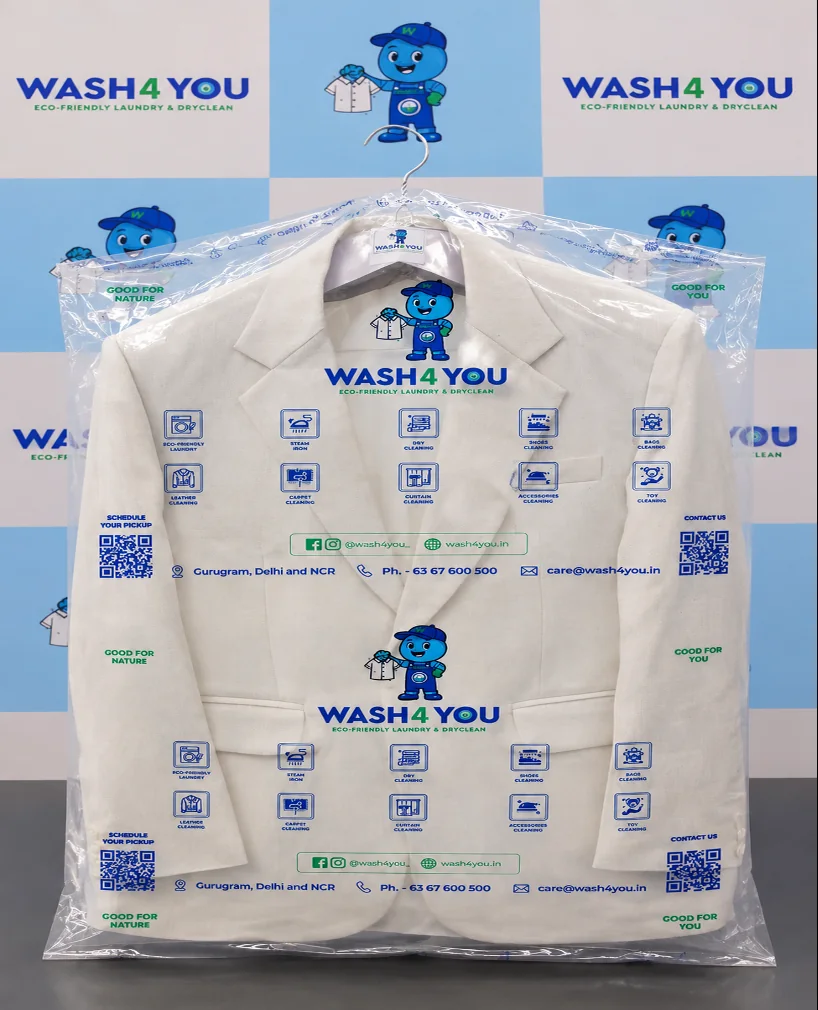
Delivered the Wash4You Way
Pressed, Covered and Sealed for the Journey Home
Every item comes back on its own hanger inside a Wash4You protective cover, with scan-to-book and contact codes on the pack, so it stays fresh until you open it.
Book free pickupBook a free pickup.
Tell us when suits you. We come to your door, count everything with you, and take it from there.